See the same customer across every Credstone product.
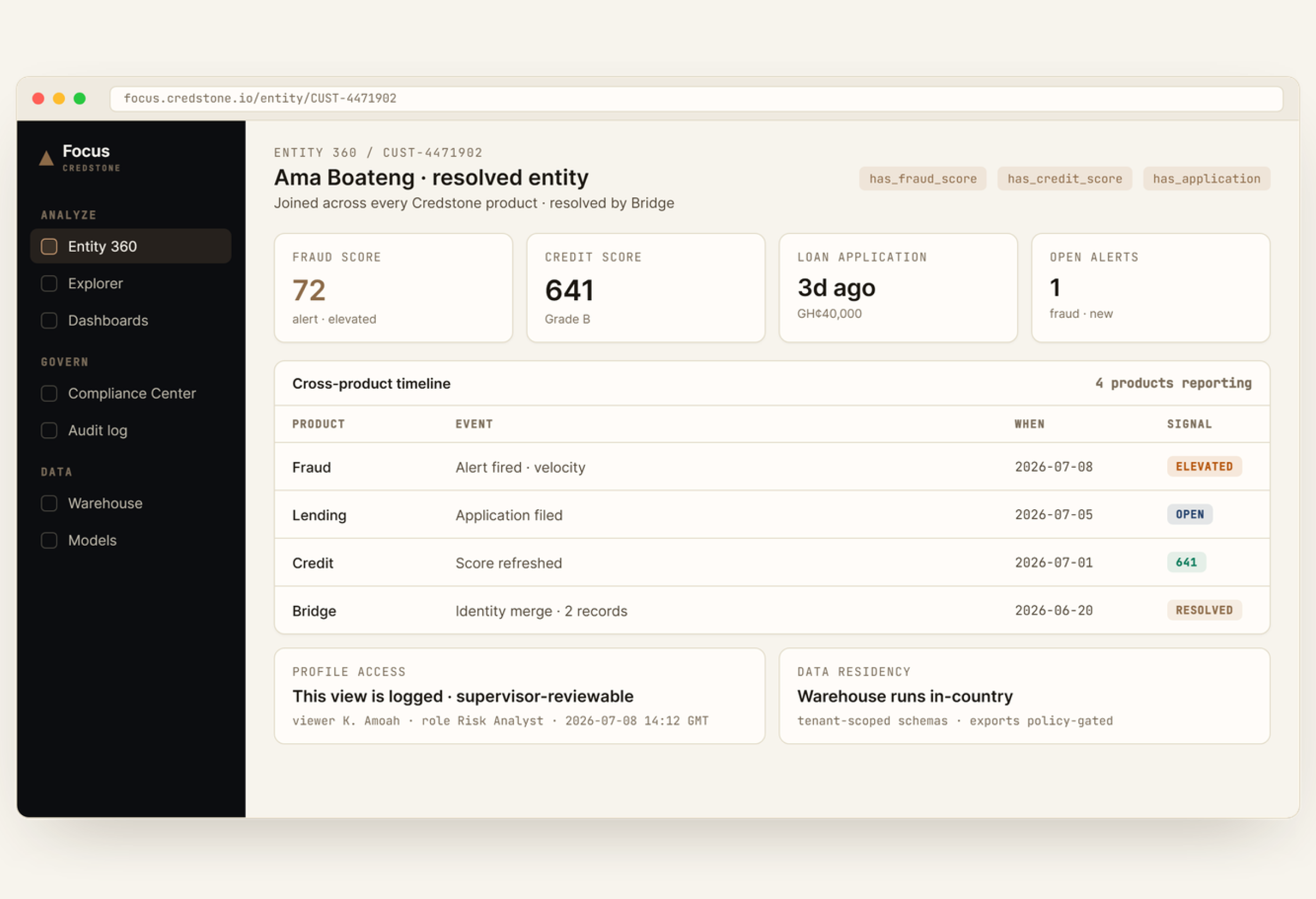
Focus is the analytics and business-intelligence layer of the Credstone platform. It gathers events from every product into one warehouse and a web app for the people who read the numbers: analysts, risk and compliance officers, and executives.
The questions that matter most span several products at once, and no single product can answer across the others.
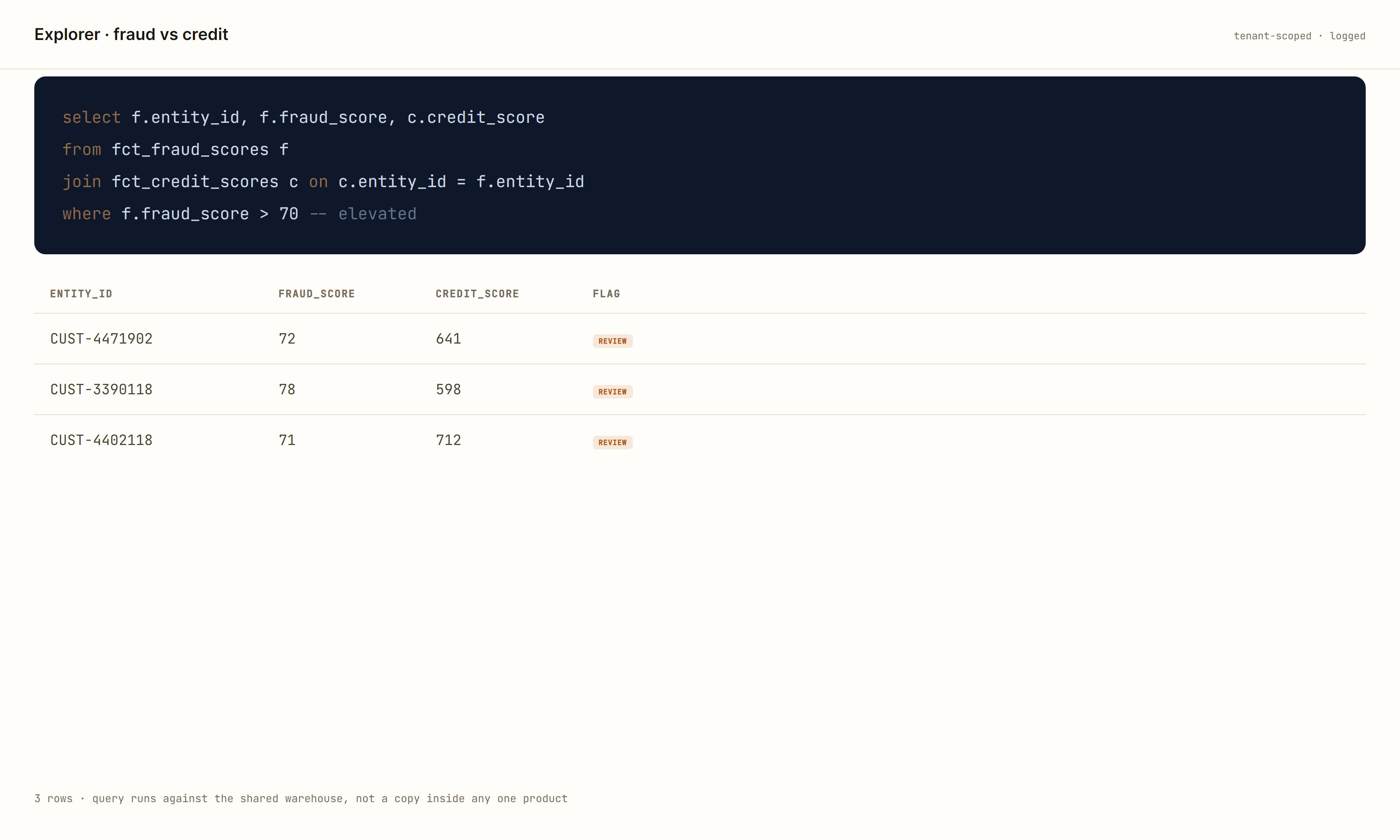
In a bank running several Credstone products, asking how fraud scores relate to credit defaults means pulling fraud, credit, and entity data together.
But each product keeps its own operational store. Until something joins them on a shared customer identity, that cross-product view does not exist.
Focus matches every product's data to one customer and builds the cross-product joins for you.
Analysts answer questions that span products from the start, rather than first assembling the identity matching and the join logic themselves, which is the work a general BI tool like Tableau or Metabase would still leave to the bank.
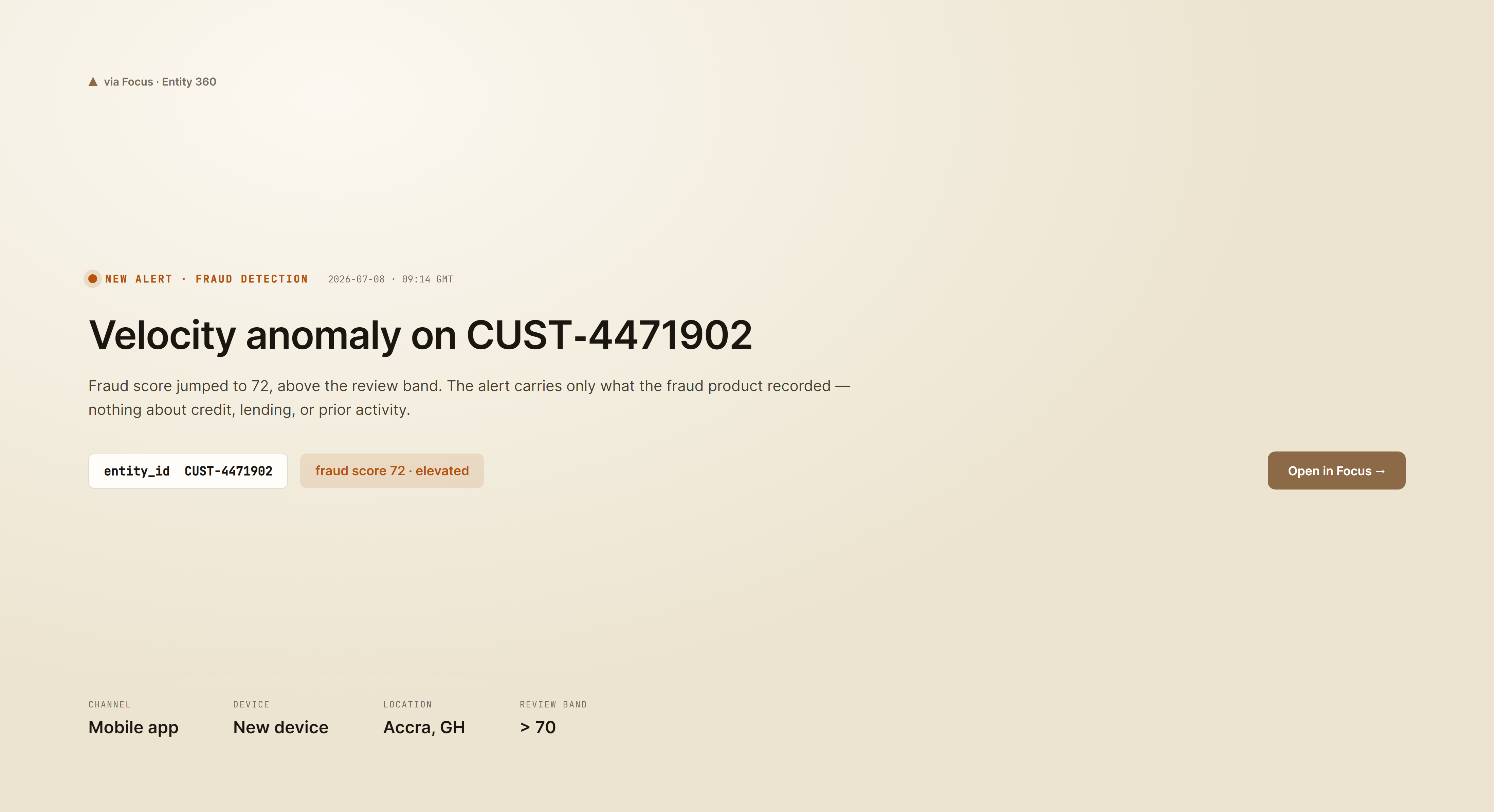
A fraud alert just fired on a customer. The alert only carries what the fraud product recorded, so before you act you pull the customer up in Entity 360.
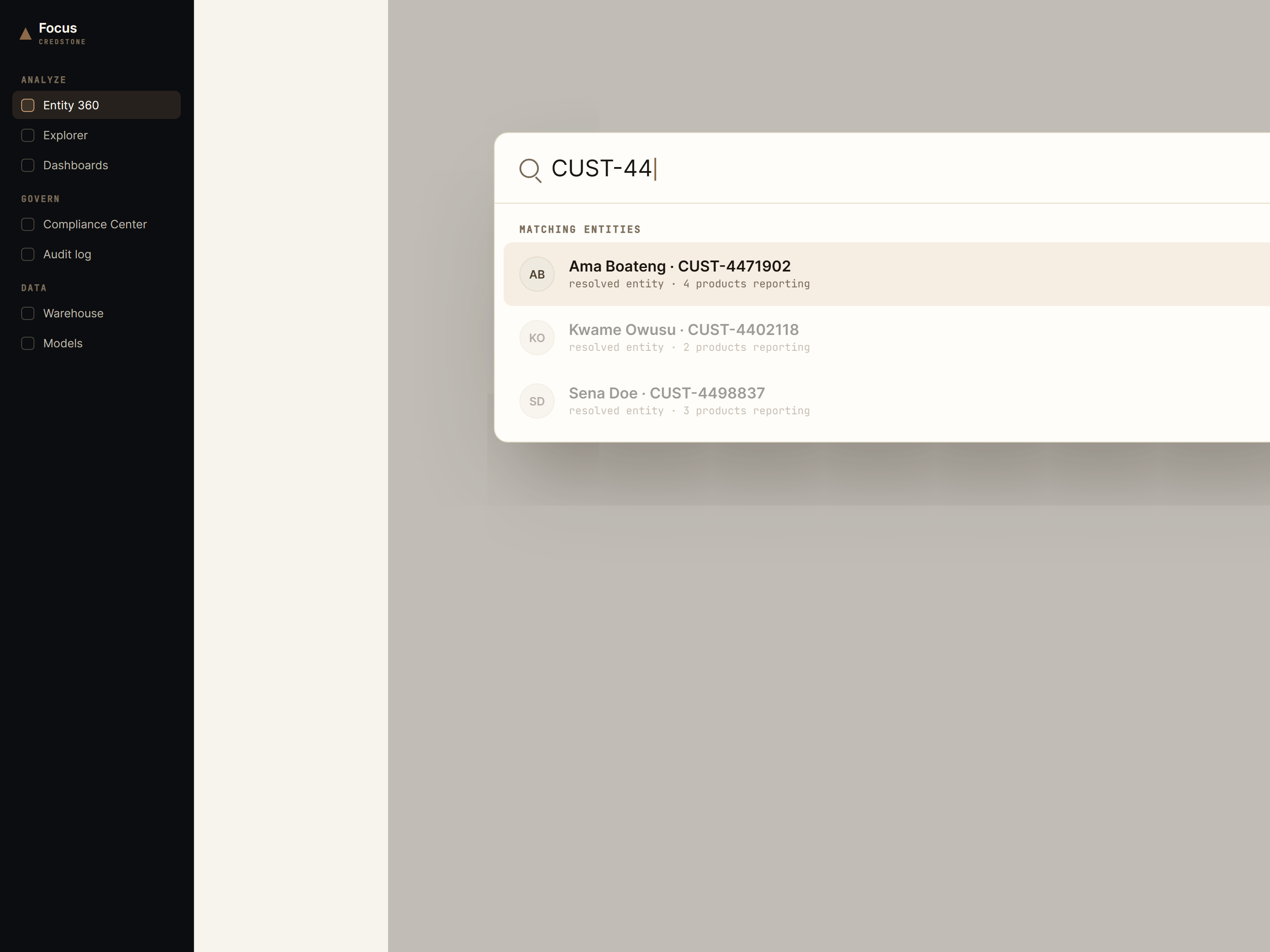
You search the customer
Type the entity id and a single profile loads, joining that person's fraud scores, credit scores, loan applications, open alerts, and resolution history from across every Credstone product onto one screen.
You see the alert in context
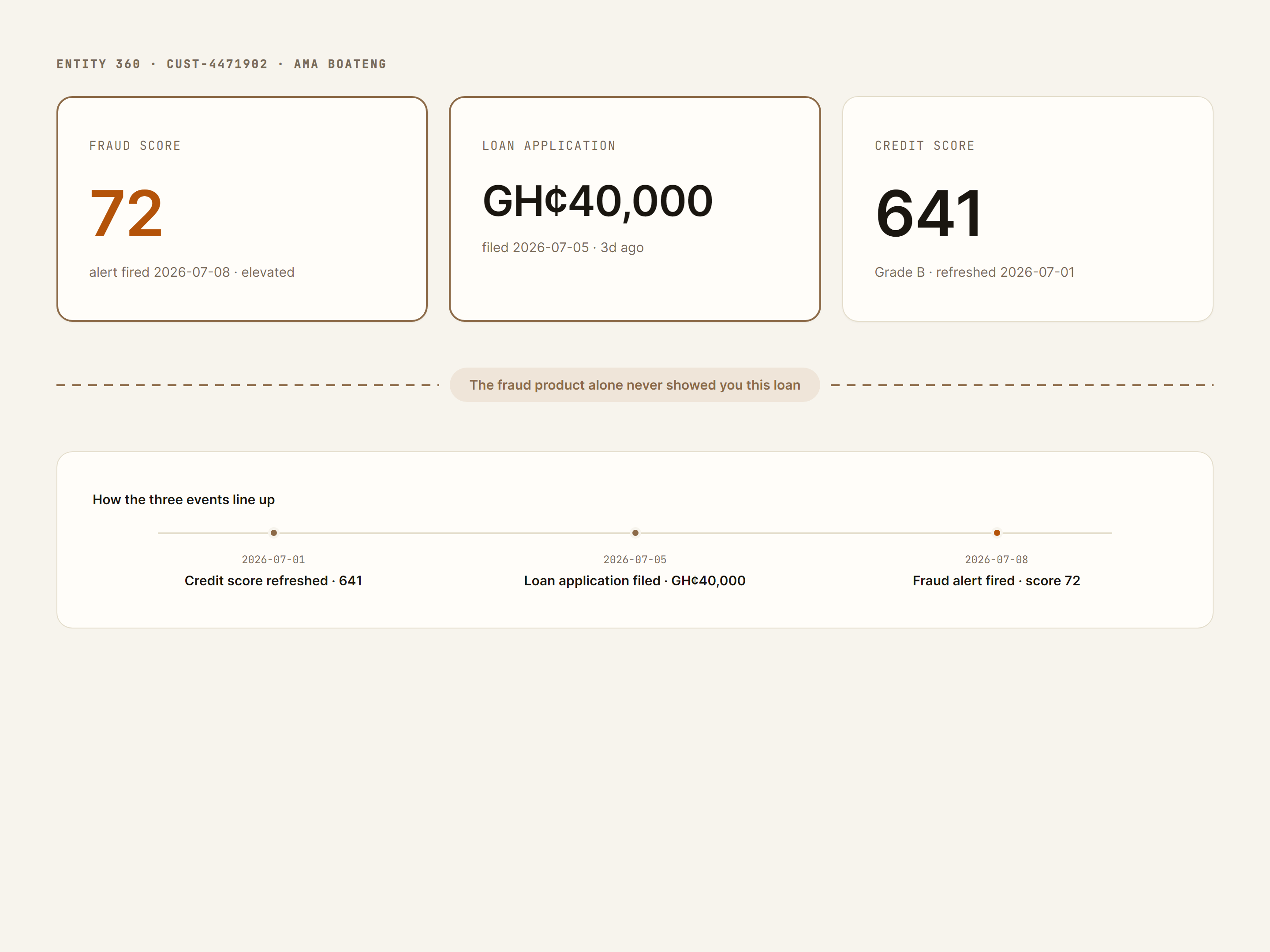
The alert that brought you here sits next to the customer's credit score and a loan application filed three days ago. The fraud product on its own never showed you that loan.
You read the presence flags
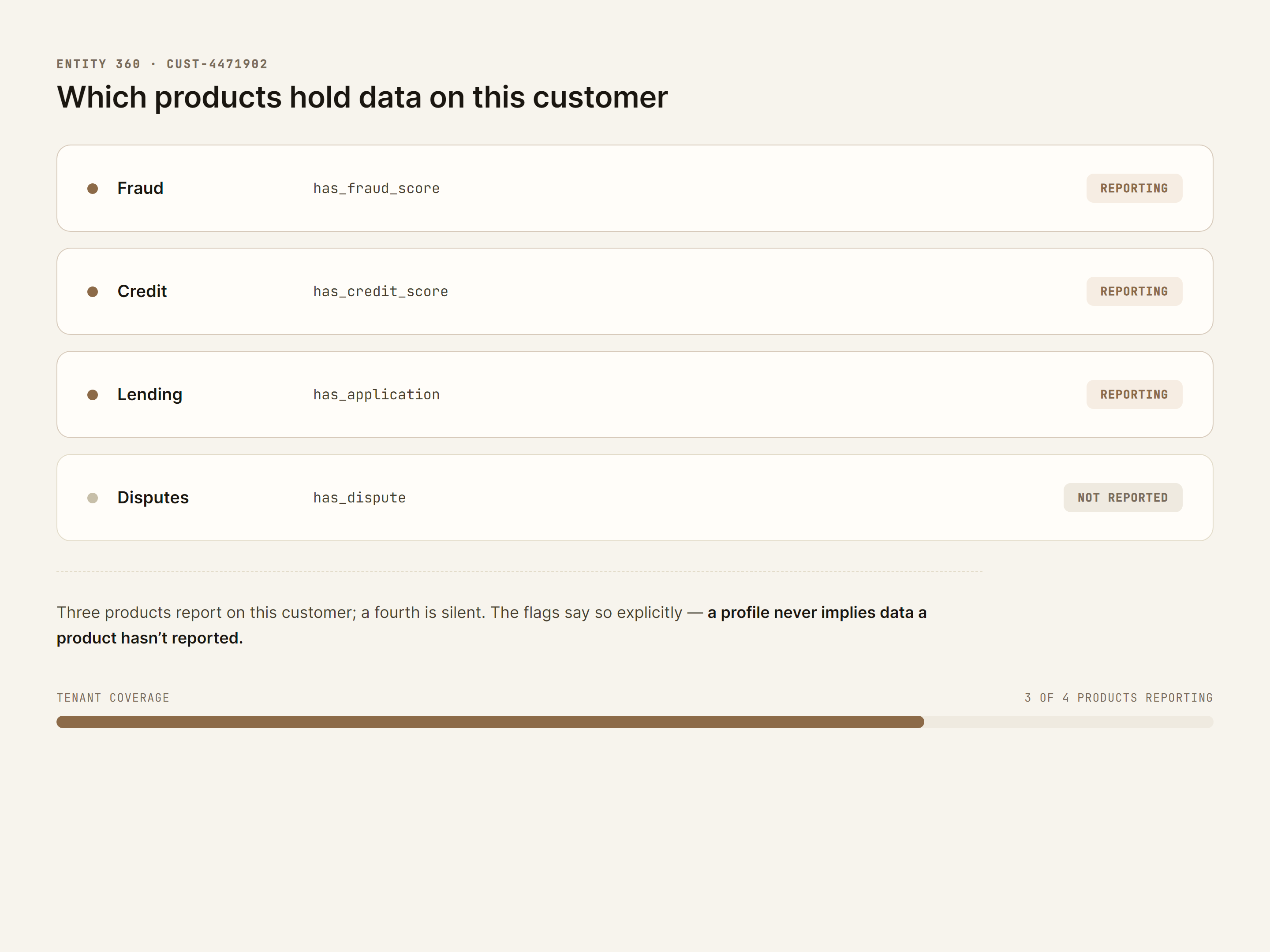
The profile marks which products hold data on this customer (a fraud score, a credit score, an application on file) and which are silent.
You confirm it is one person
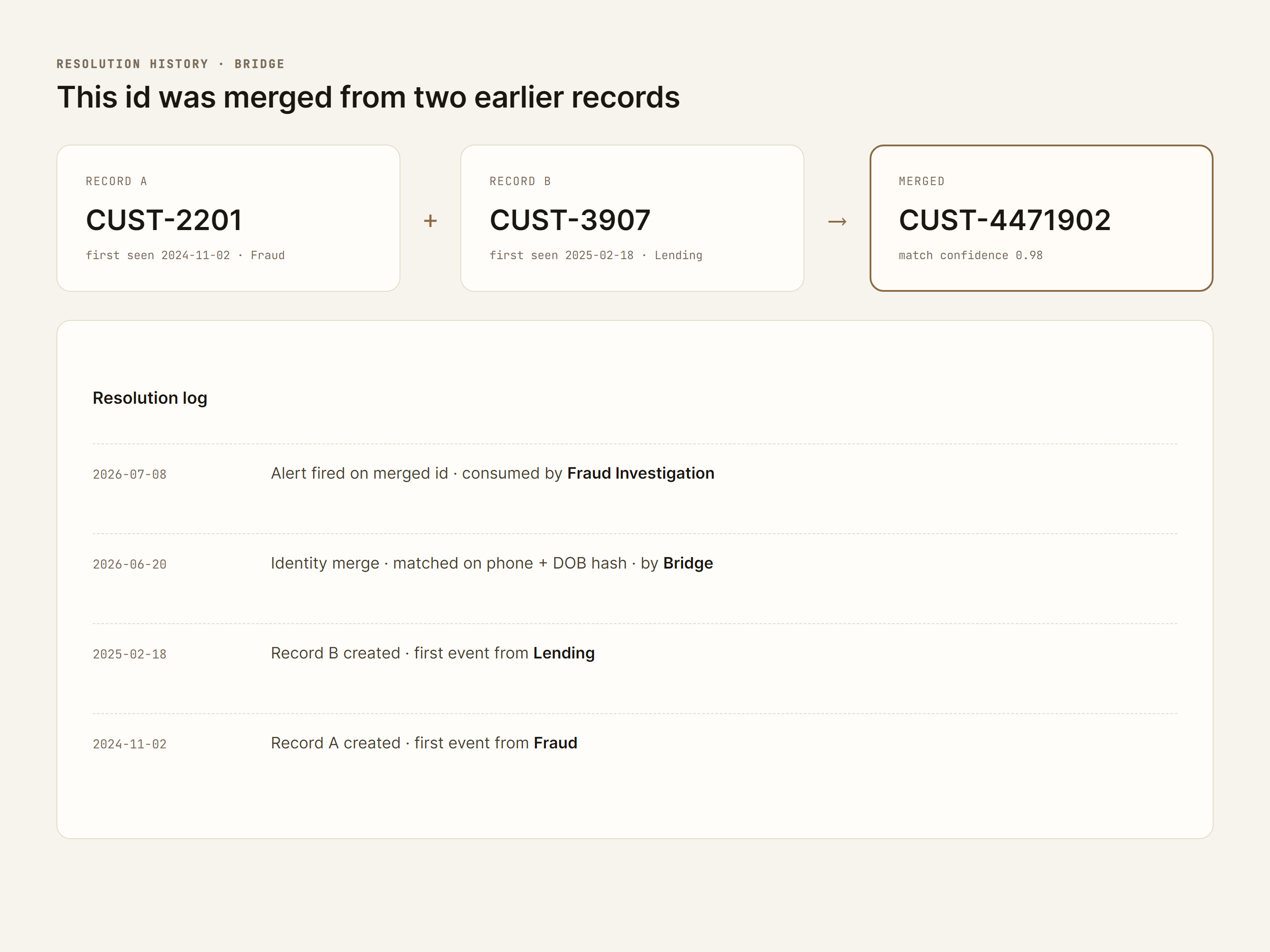
The resolution history shows this id was merged from two earlier records by Bridge, Credstone's identity-resolution service, so the loan and the fraud alert belong to the same customer.
You open a case
Start a case in Fraud Investigation and attach the profile as evidence. Focus logged your view to its audit trail, so there is a record of who looked at what.
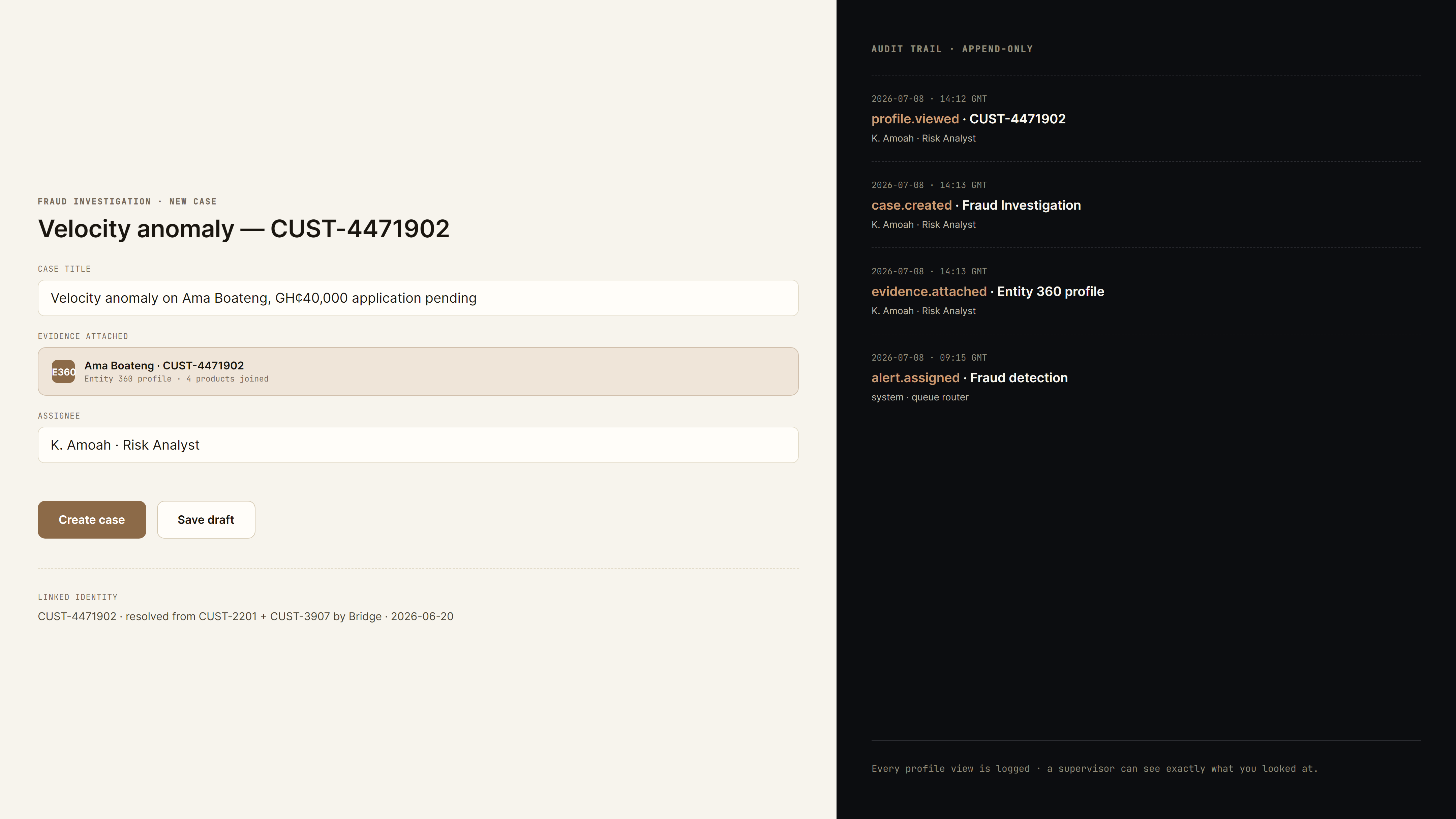
How much a profile shows depends on how many Credstone products the tenant runs, and the presence flags make that explicit, so a profile never implies data a product hasn't reported.
You made the call with the whole customer in front of you.
The alert finally made sense with the loan and the credit score sitting beside it. And because every profile you open is logged, a supervisor can later see exactly what you looked at.
Figures are labelled by how they were established. Targets and illustrative values are not measured production results.
Built for the regulators it ships into
- Data Protection Act 2012 (Act 843)
- No raw customer data in the warehouse (identifiers arrive hashed), with retention and access controlled through Console.
- BoG prudential reporting
- The prudential-return template auto-fills the data-driven sections; capital and liquidity need CFO sign-off and carry a human-review watermark.
How it fits the platform
Supplies the single customer identity and hash-only identifiers the warehouse is built on.
Feeds fraud decisions, alerts, and SAR status into the fraud and compliance workspaces.
Feeds credit decisions and model performance into the model and portfolio workspaces.
Feeds loan lifecycle events into the portfolio and board workspaces.
Controls which roles can open which workspaces.
See the cross-product view, already joined.
Request a technical walkthrough. We are scoping the first design-partner deployments now.
Request a walkthroughConsole
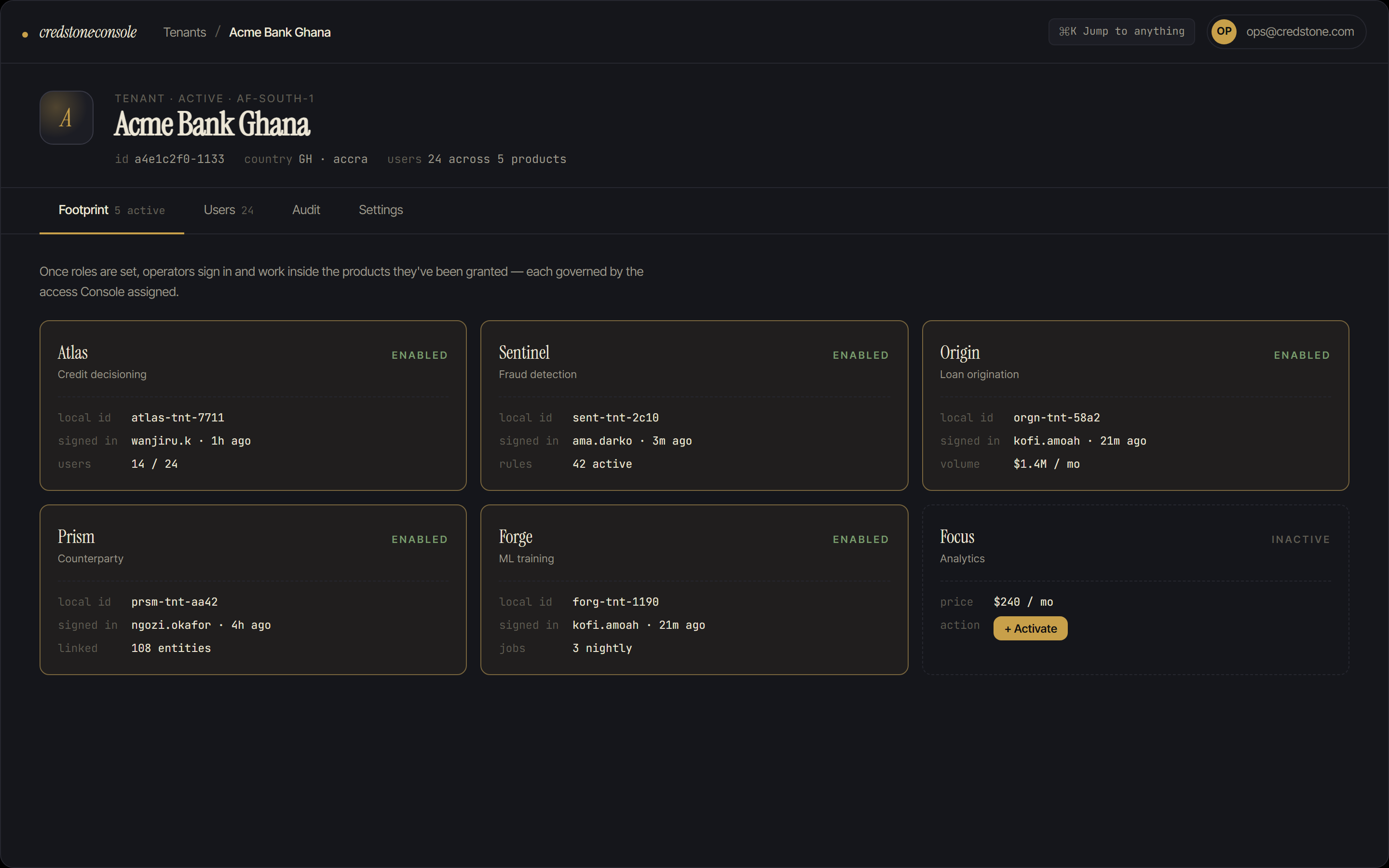
Console is the single place to run the platform: set up and offboard tenants, switch products on, manage who can do what, and keep an unbroken audit trail. It governs; it never touches live transactions.
Explore Console