Turn your own lending data into a live, governed credit model.
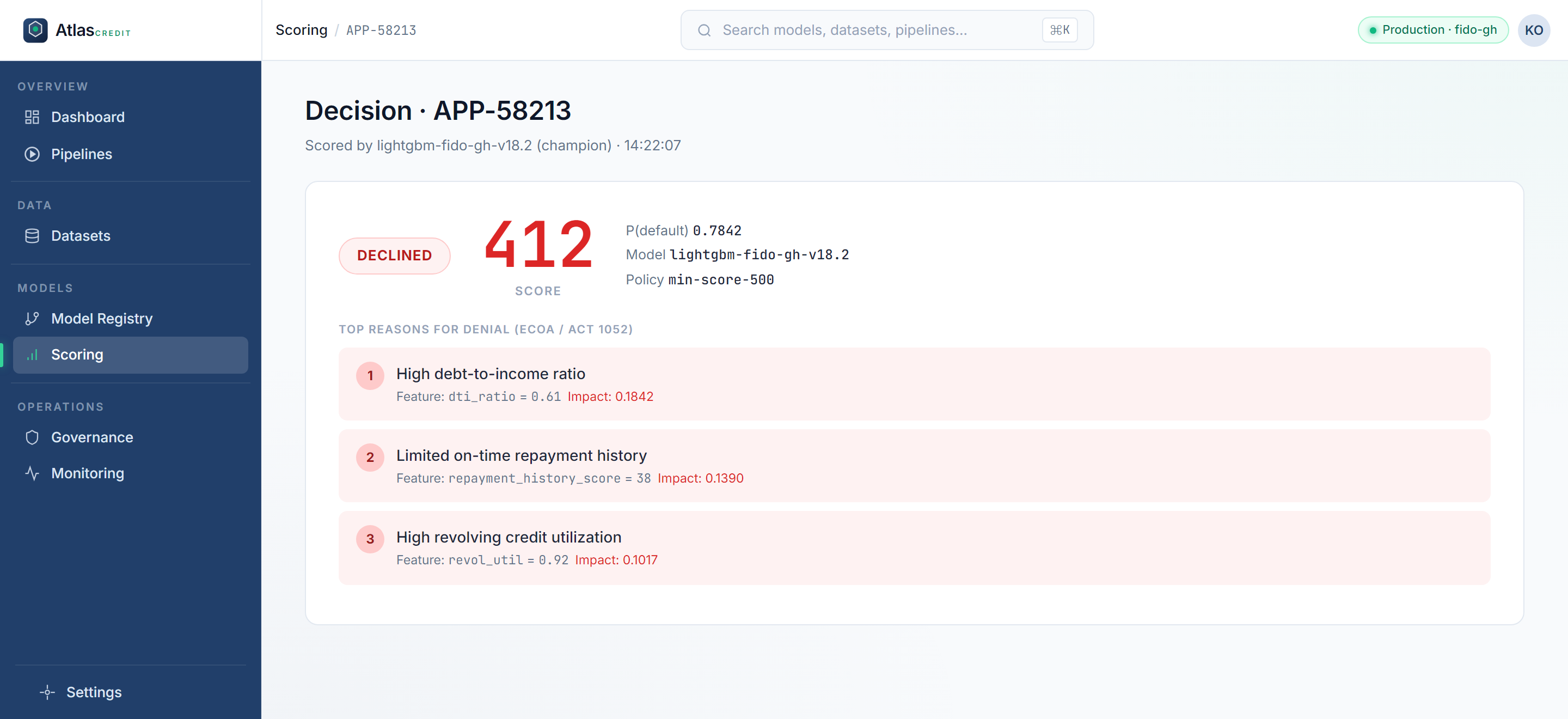
Atlas takes the lending history you already have and builds a working credit-analytics model from it, trained only on what you actually knew at each decision date. Every score comes back with the reasons behind it, so a decline holds up when a regulator asks why.
Building a credit model means hiring a data-science team you don't have.
Most lenders have the data (years of loan applications, repayments, defaults) but not the modeling pipeline to turn it into a score. A model built in-house without discipline about what was knowable on the decision date quietly cheats: it uses information that only showed up after the loan was already made.
And a score without a reason attached is a liability the moment a regulator, or a declined applicant, asks for one.
Atlas builds the model from your data and keeps every decision explainable.
Upload your lending history (CSV, Excel, or a live feed) and Atlas profiles it, engineers features using only point-in-time-correct data, and searches model types for the best fit on your own test set.
Every score that comes out the other side carries its top reasons, mapped to the Borrowers and Lenders Act, plus a versioned model record, fairness checks, and a decision log an auditor can replay.
A lender wants to stand up scoring on their own portfolio. Follow the data from upload to a live decision.
- 01 · Profile
Atlas reads your data
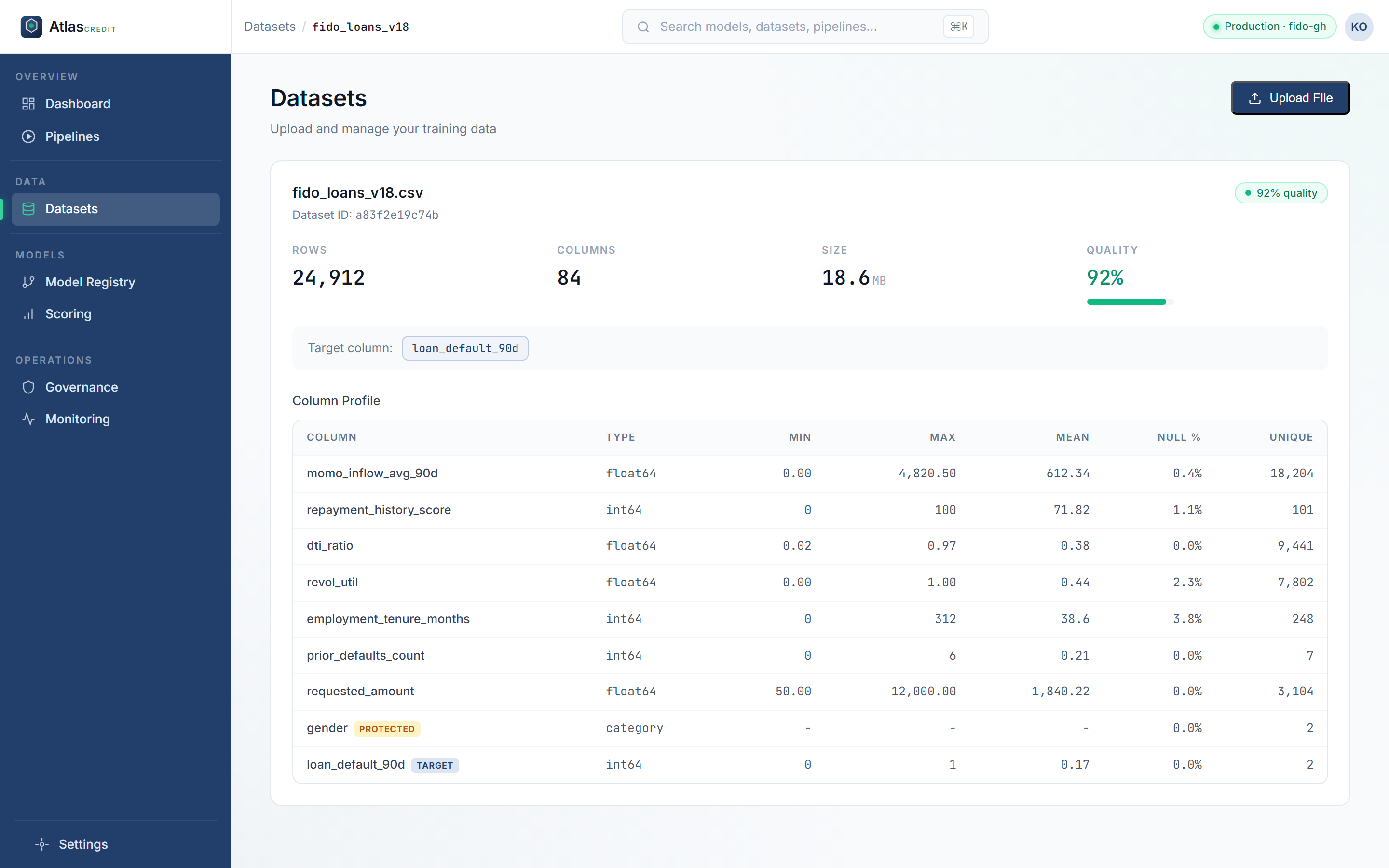
You point Atlas at your lending history. It checks data quality and maps how your tables relate to each other before touching a model.
- 02 · Build
It builds the model
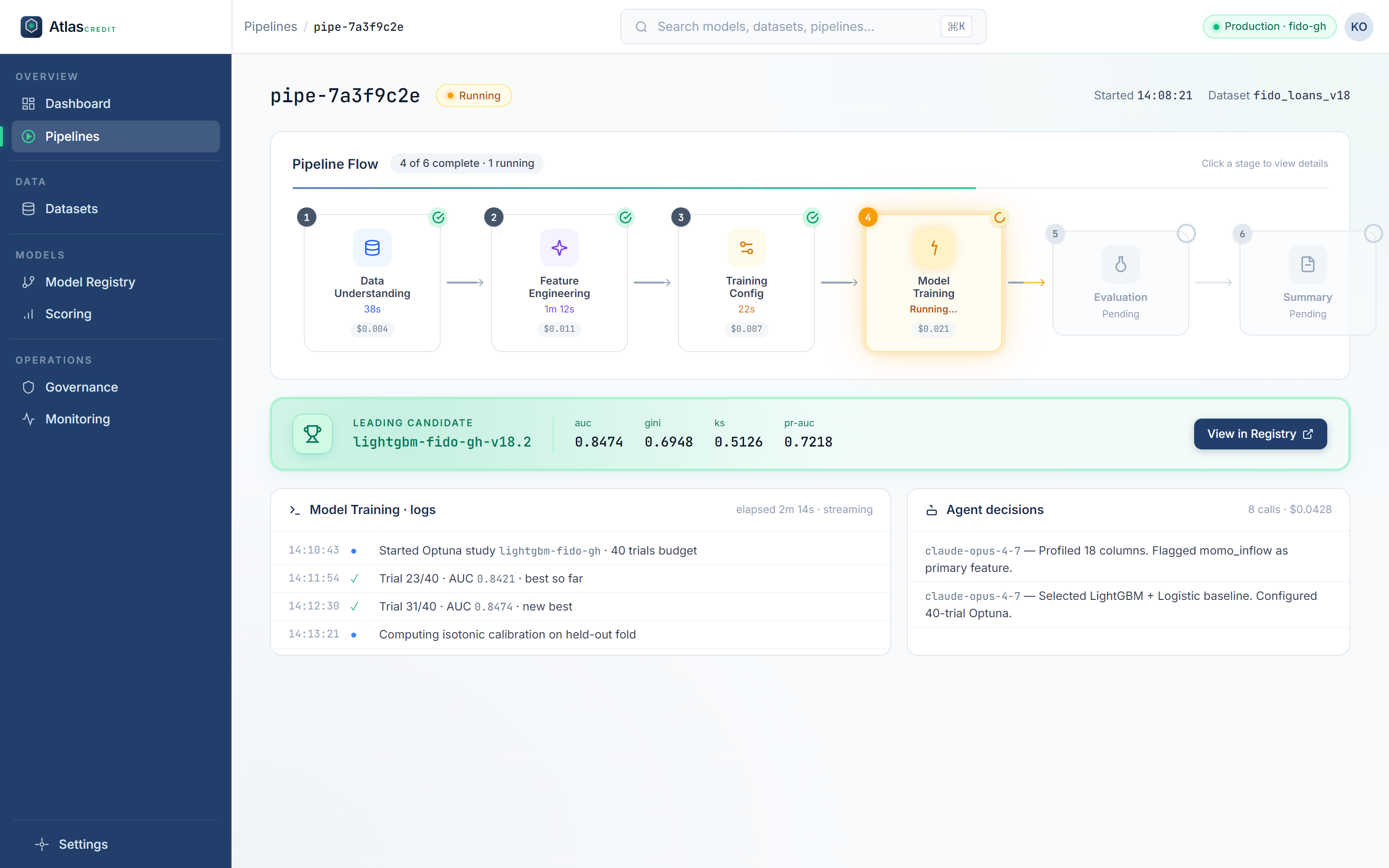
Atlas engineers features using only data that existed before each decision date, then searches model types for the best-performing fit on your own test set.
- 03 · Serve
It scores in real time
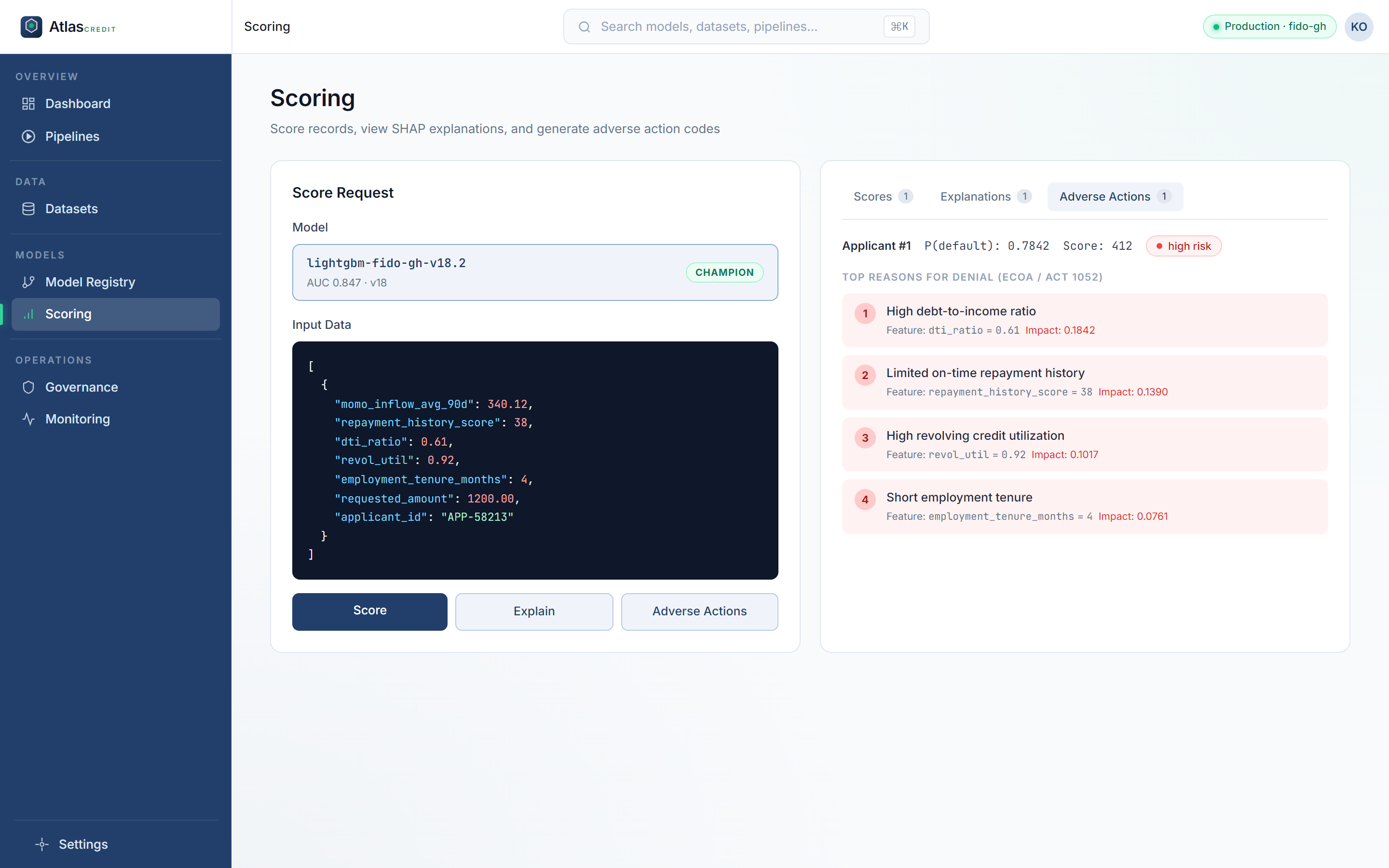
Real-time and batch scoring go live, and every decision (approve or decline) comes back with an explanation and an adverse-action reason attached.
- 04 · Govern
You can account for every score
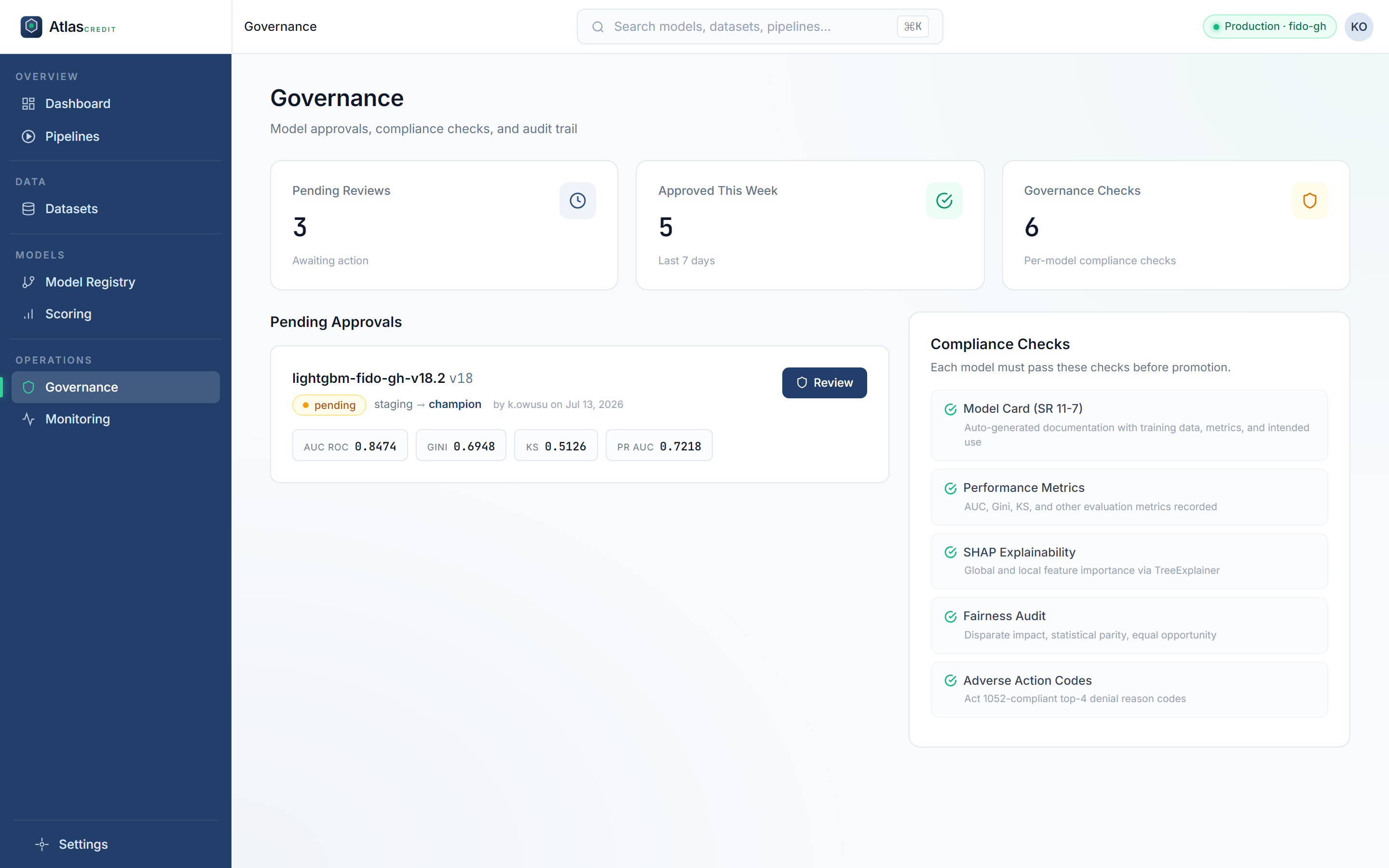
Versioned model cards, fairness and drift monitoring, and a decision log stand behind the model, ready to replay for an auditor.
The model that goes live is the same one that gets audited: same version, same reasons, same log.
A regulator asks why a loan was declined, and the answer is already on file.
The score, its top reasons, and the model version behind it are all recorded at decision time, so answering the question later is a simple lookup against that record.
Figures are labelled by how they were established. Targets and illustrative values are not measured production results.
Built for the regulators it ships into
- Borrowers and Lenders Act 2020 (Act 1052)
- An adverse-action reason for every decline, available through an explanation API.
- SR 26-2 (model risk management, successor to SR 11-7)
- Auto-generated model cards, independent validation, and ongoing drift monitoring.
- Data Protection Act 2012 (Act 843)
- Consent tracking, PII detection and masking, retention controls, and right-to-deletion.
How it fits the platform
Verifies the sign-in tokens Atlas trusts. One identity across the platform.
The shared training backend Atlas runs model training on.
Resolves entities and relays the cross-product features that enrich scores.
Uses Atlas scores to drive loan-origination decisions.
Put your own data to work on a model you can defend.
Atlas is in production, targeting a minimum AUC-ROC of 0.75 on your own test set, with sub-100ms P99 latency and full SR 26-2 and Act 1052 coverage.
Book a technical walkthroughPrism
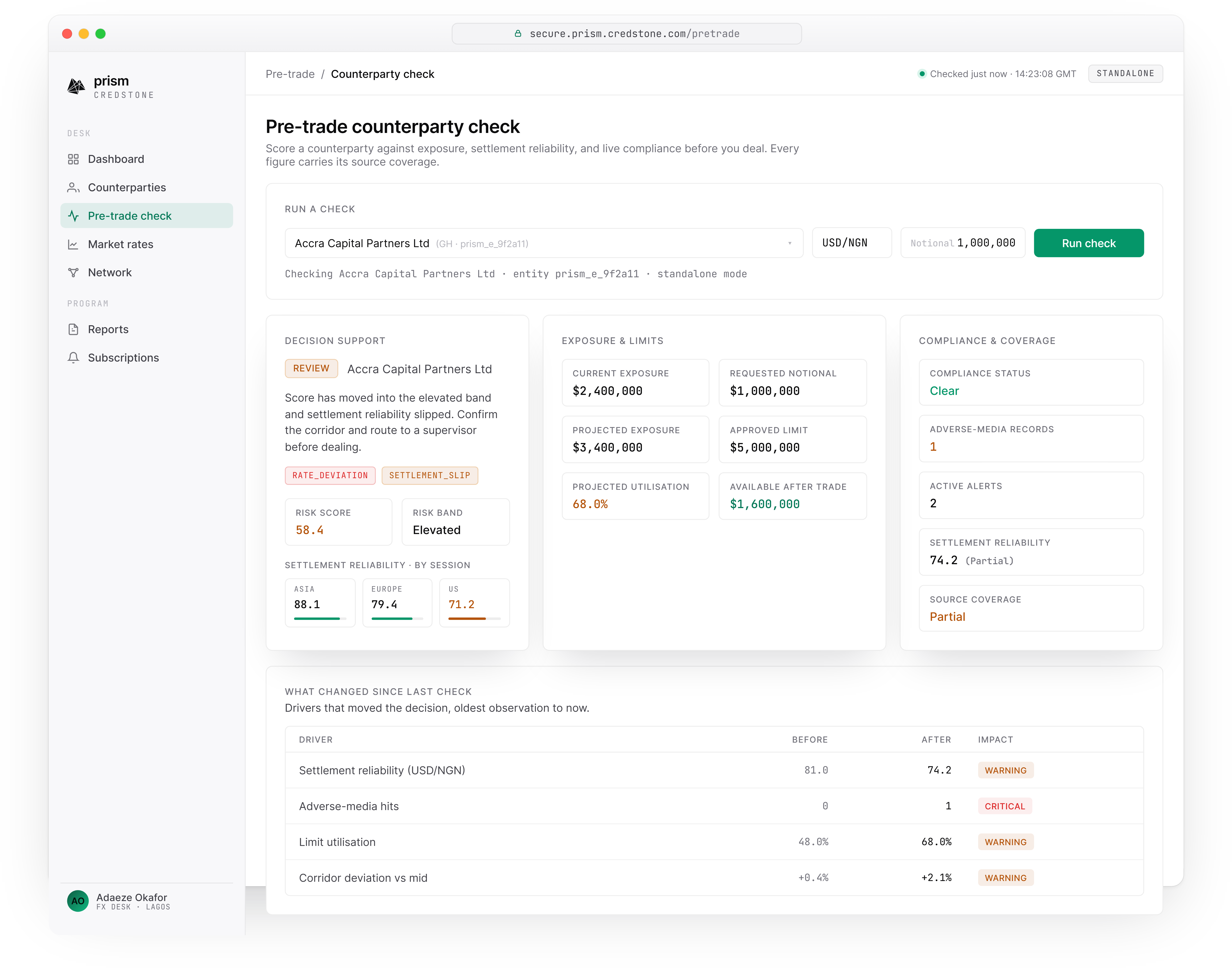
A neutral risk read on your African FX and treasury counterparties: a 0–100 score, settlement reliability by currency pair and time of day, and live compliance status across jurisdictions. Prism never trades, quotes, matches, or settles.
Explore Prism