Prism

FX & TREASURY COUNTERPARTY INTELLIGENCE

Make every treasury decision with a clearer view of risk.

Prism gives FX and treasury teams a clear view of counterparty risk, settlement reliability, compliance status and market anomalies before every trade.

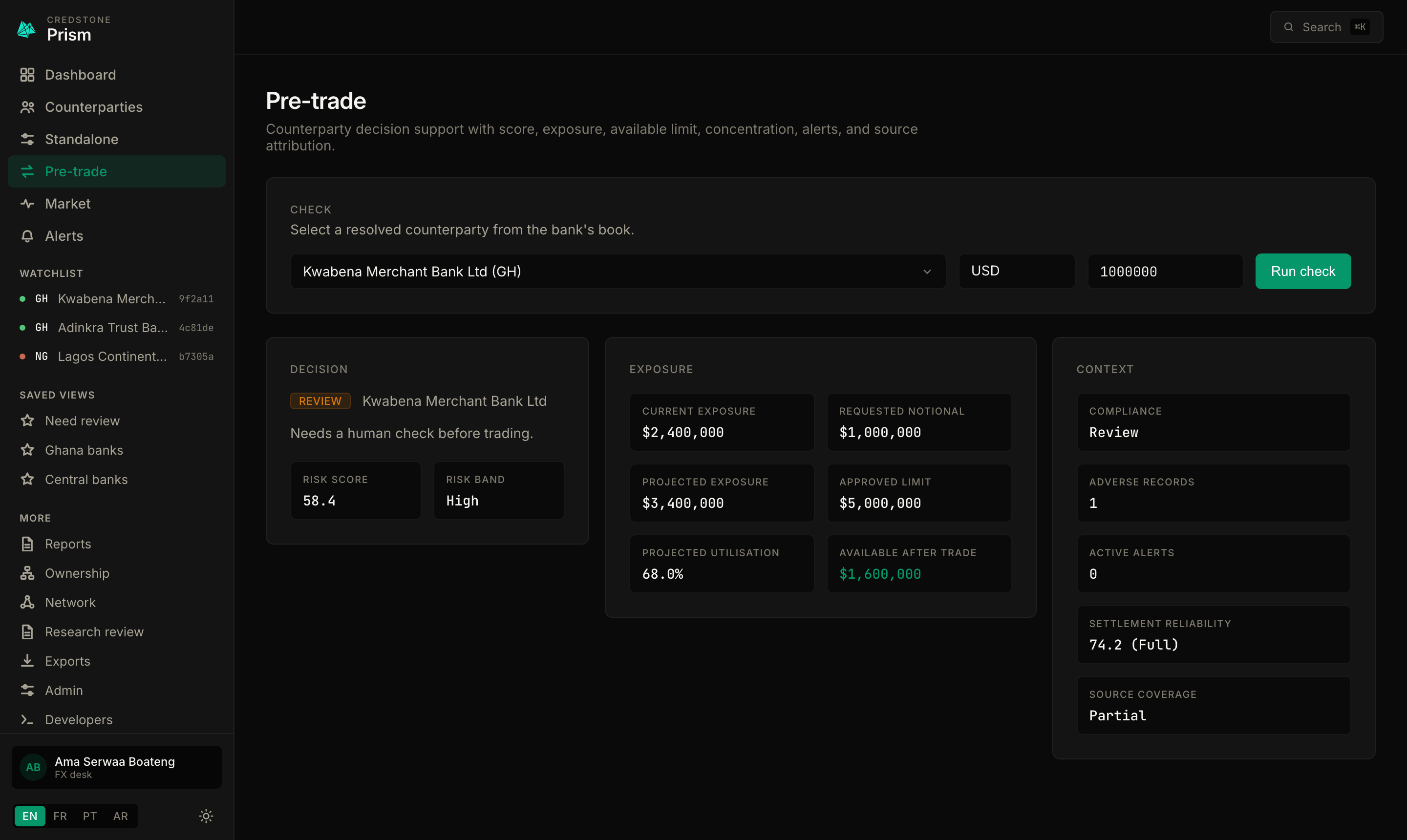
The Prism pre-trade check, showing a proposed deal against Kwabena Merchant Bank Ltd with its verdict of review, the risk score and band, the exposure against the approved limit, and the compliance and settlement context behind the answer.
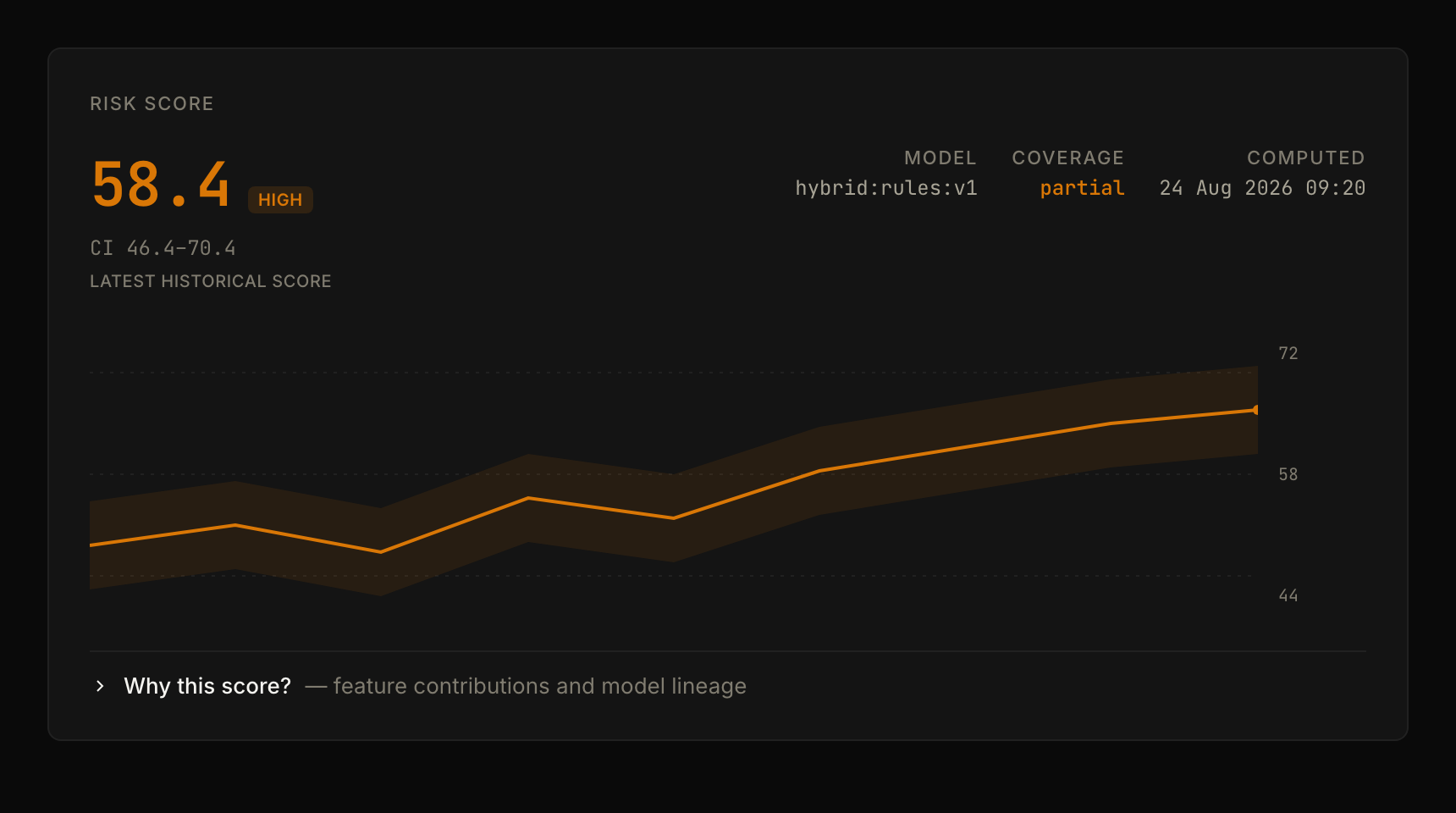
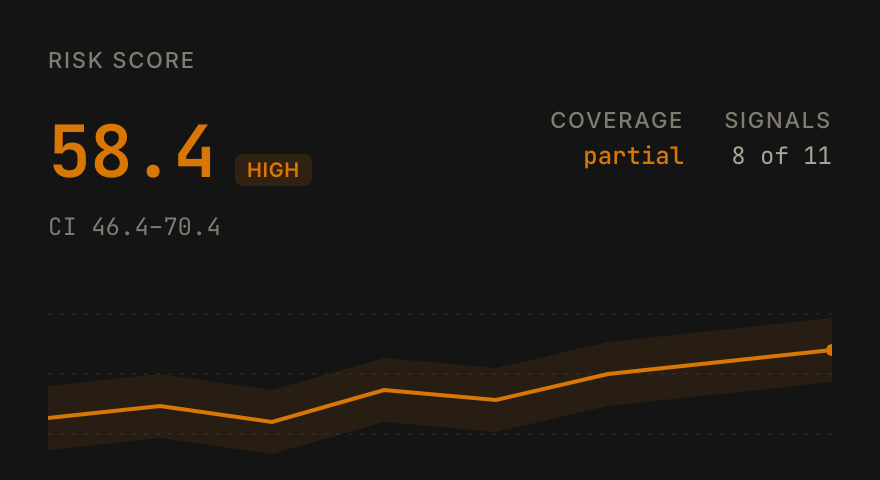
A risk score card reading 58.4 in the high band, with a confidence interval of 46.4 to 70.4, partial source coverage, and eight of eleven signals present.

Prism reads what your data contributes,

the coverage behind the number, the score, the rules of your jurisdiction, and the verdict on the deal you propose.

Every batch is checked before it lands in the ledger.

Observations arrive bucketed and anonymised. Prices, deal ids, counterparty names and account identifiers are refused at ingest, and each accepted batch is linked to the one before it. The audit log refuses every update and delete at the database itself.
Ops
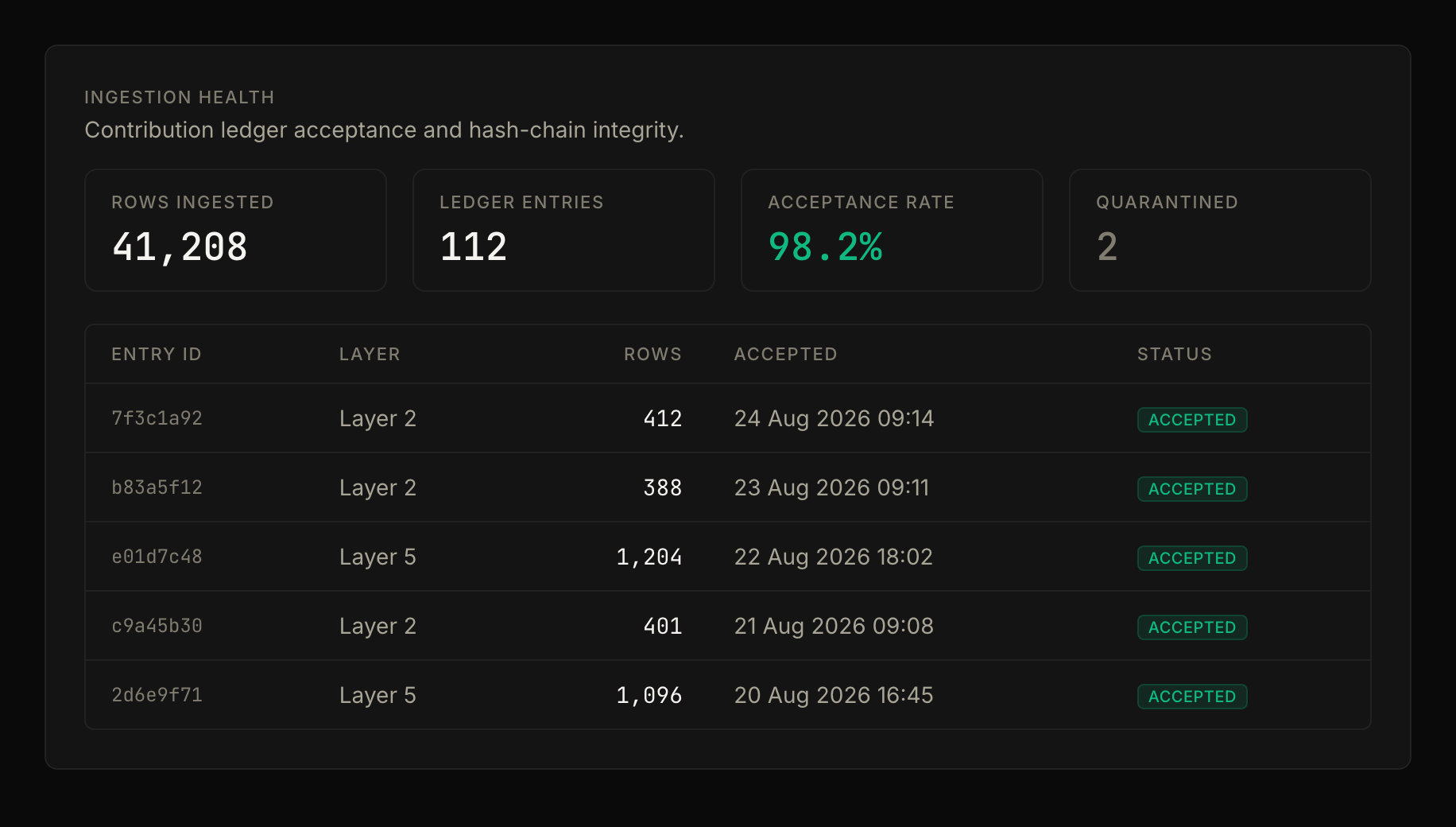
Prism's ingestion health view: the batches accepted into the ledger, each with the layer it belongs to and the checks it cleared.
02 · COVERAGE

The number arrives with the evidence behind it.

Prism assembles the signals it can observe on a name and records the source that produced each value. A name with too little behind it comes back as a refusal that lists what is missing.

Pre-trade
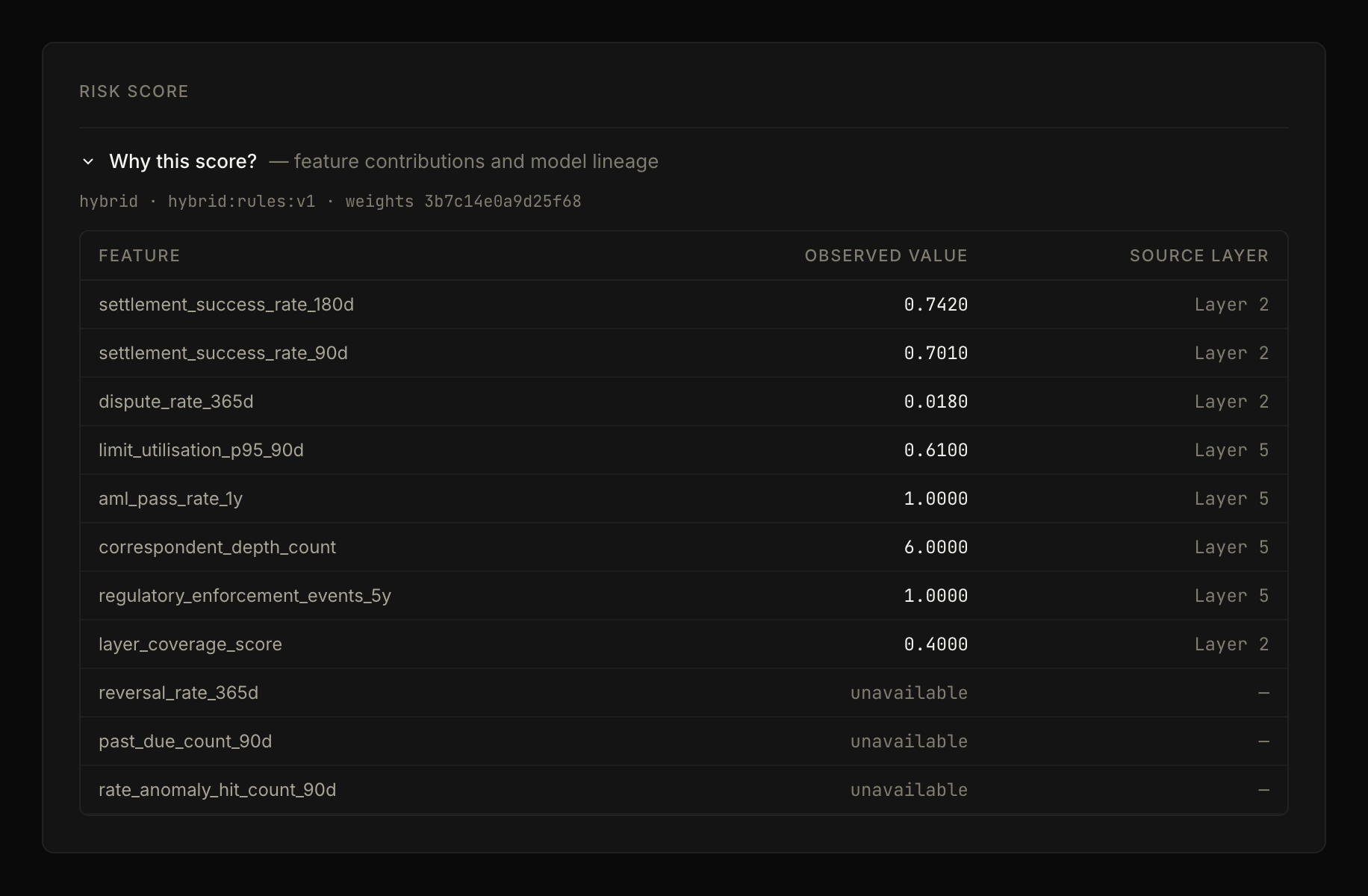
A score traced back to its inputs: the coverage behind the number, which layers contributed, and how each was weighted.
03 · SCORE

Every score carries its confidence band and the weights that produced it.

A 0 to 100 figure lands in one of four bands, and the confidence band widens as the data thins: five points either side at full coverage, twelve at partial. The model version and the weight table sit on the score itself.

Pre-trade
A counterparty's risk score with its confidence band, the weights that produced it, and the model version that ran.
04 · RULE CHECK

The jurisdiction's rules, run one at a time, with the arithmetic shown.

A threshold rule returns the values it used and a readable line of the comparison, so a compliance officer can point at the figure that moved. When the signal behind a threshold is missing, the rule comes back skipped with the reason named.

Admin
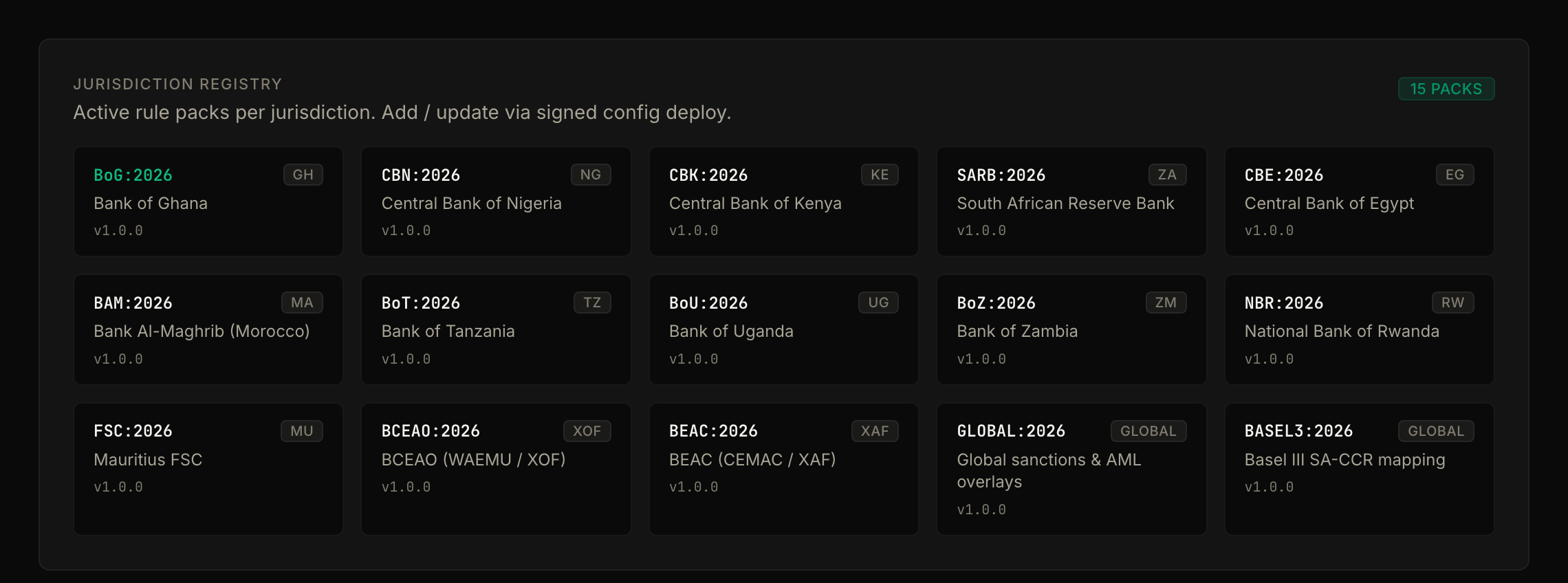
The jurisdiction registry: fifteen active rule packs, each carrying the regulator that issued it, its country, and its version.
05 · VERDICT

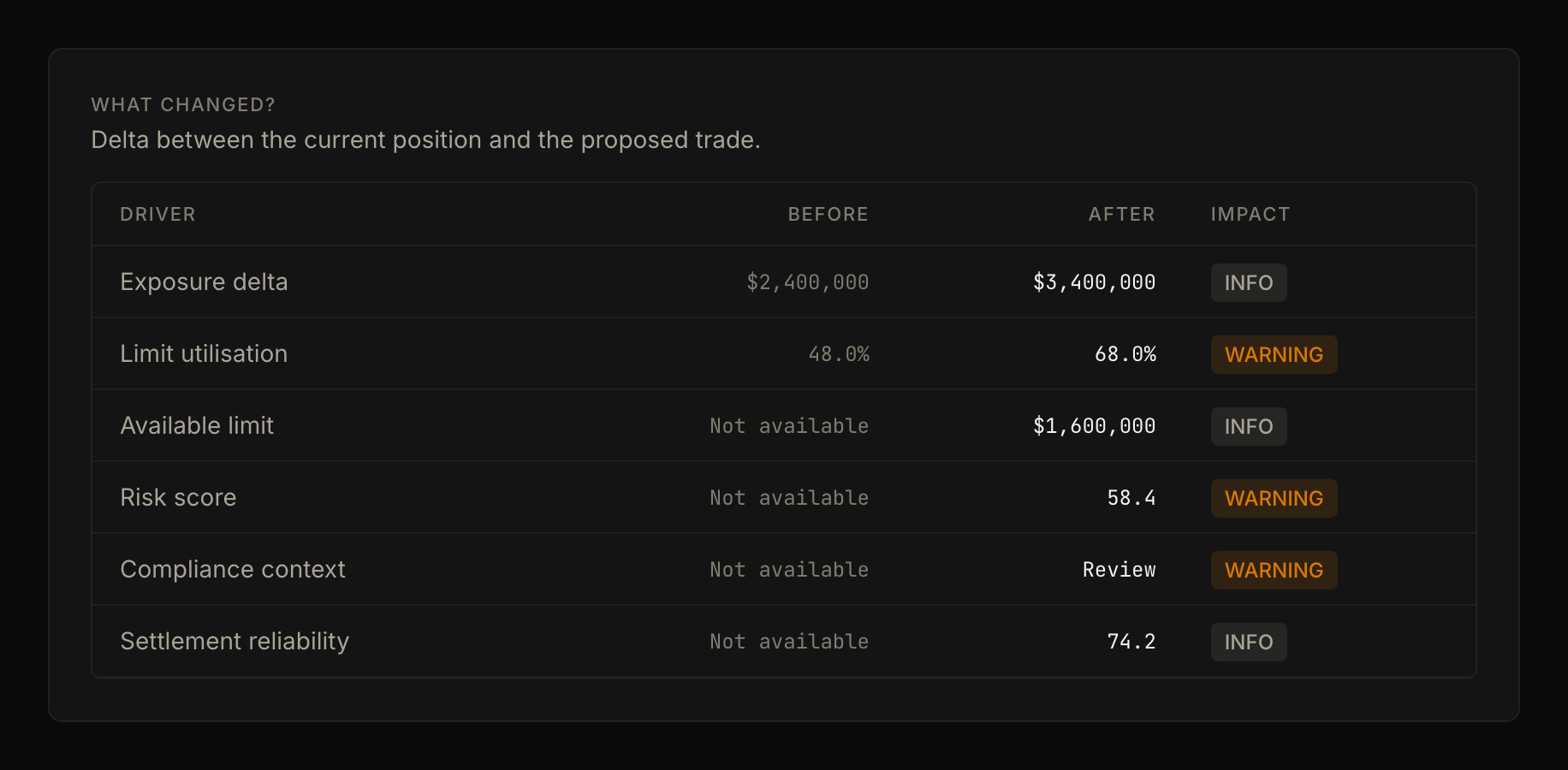
Propose a deal and the check returns a verdict with the drivers behind it.

The check computes exposure against your approved limit, reads screening state and settlement behaviour, and runs a published cascade in which the hardest verdict wins. Insufficient data comes back as a verdict of its own, with the missing input named.

Pre-trade
A pre-trade check returning its verdict, with the drivers that moved the figure listed beside it.

Settlement reliability, pair by pair.

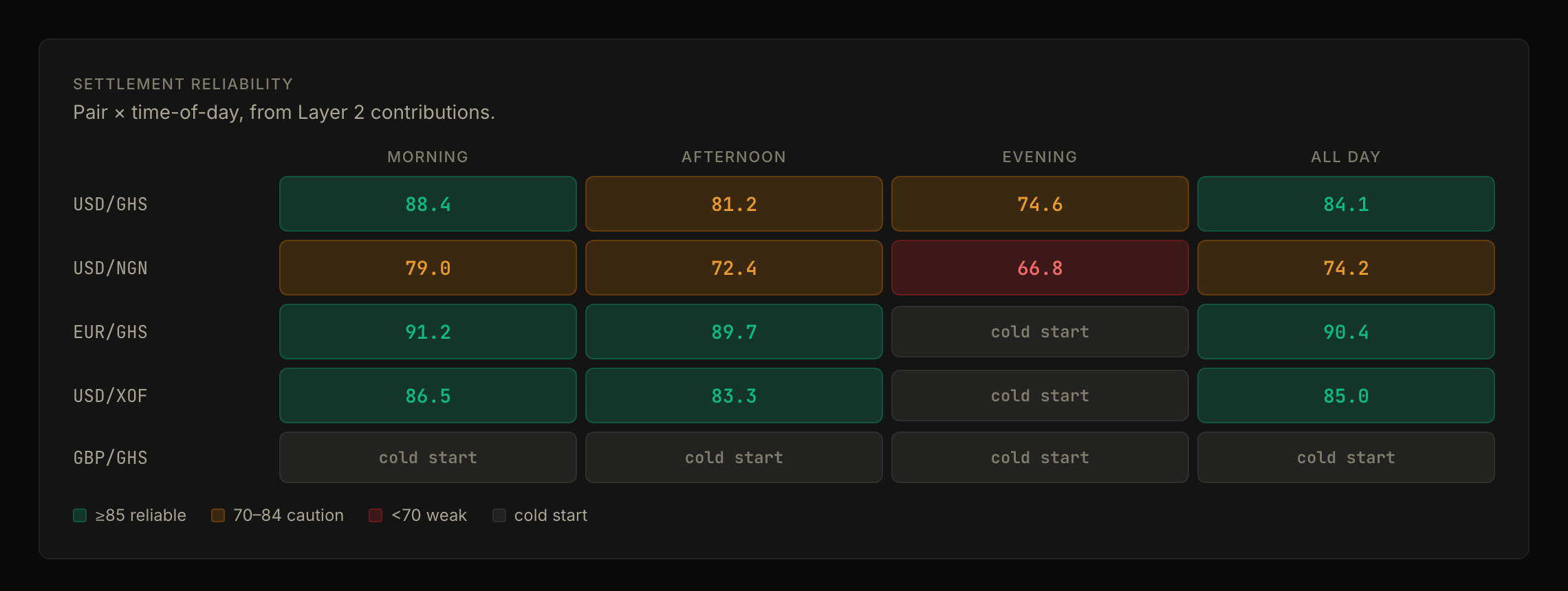
Each name is rated per currency pair and per time of day, weighted toward recent behaviour. Below twenty observations the rating is marked cold start.

Counterparties
A settlement reliability rating broken out by currency pair and time of day, with thinly observed pairs marked as cold start.
Technical walkthrough

Bring one counterparty your desk deals with.

Prism scores it against your own book, so the first figure you see is one you can check against a name you already know.

Book a demo
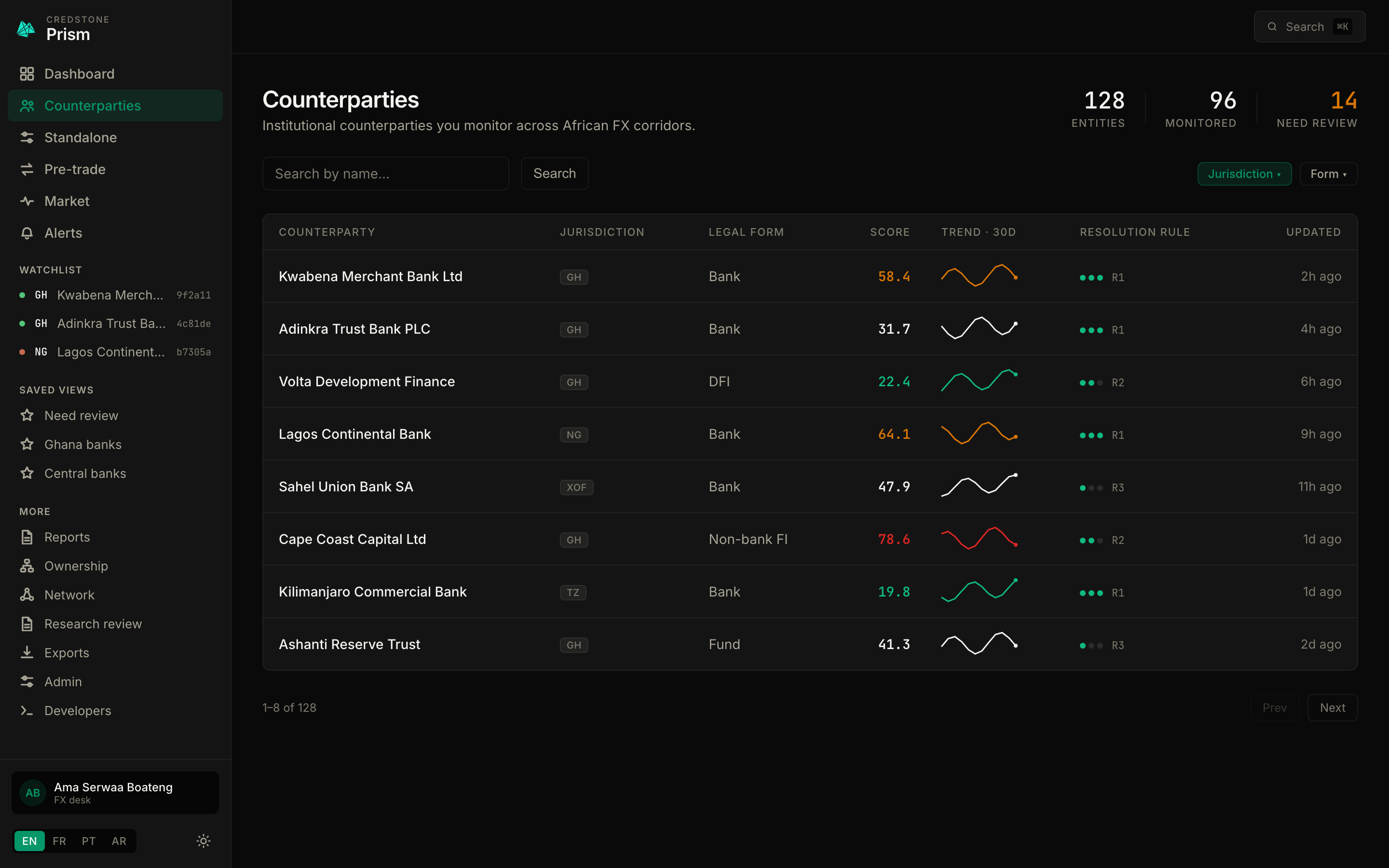
The Prism counterparty book, listing the institutions a desk monitors with their jurisdiction, legal form, current risk score and the rule that resolved each identity.