CREDIT ANALYTICS INTELLIGENCE

Credit analytics and risk controls for better lending decisions.

Atlas helps financial institutions build, govern and deploy credit models from their own lending data, with clear reasons behind every score and decision.

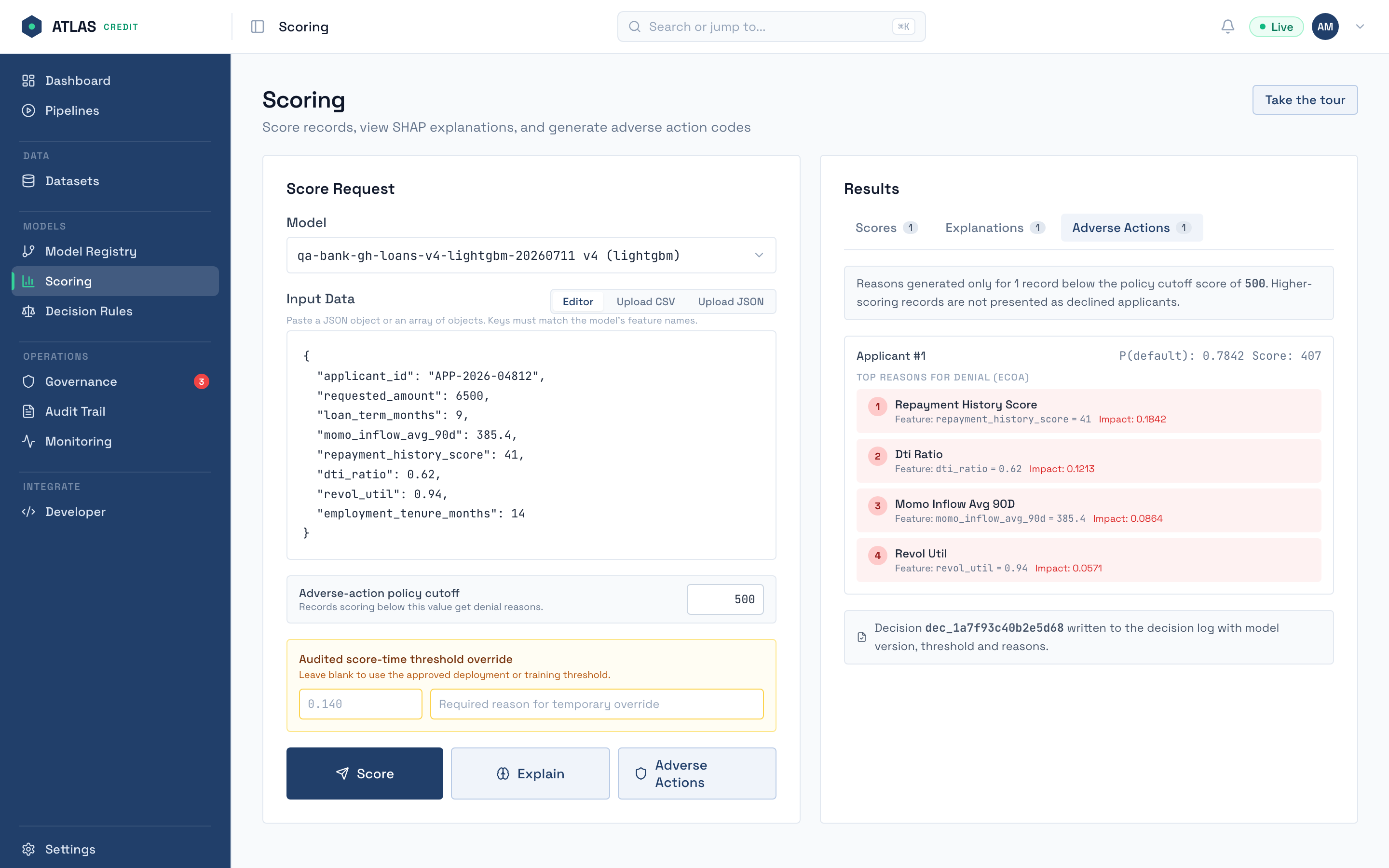
The Atlas scoring screen, with the request on the left carrying the champion model, the applicant record and the policy cut-off, and the result on the right listing the ranked reasons behind a denial and the decision written to the log.
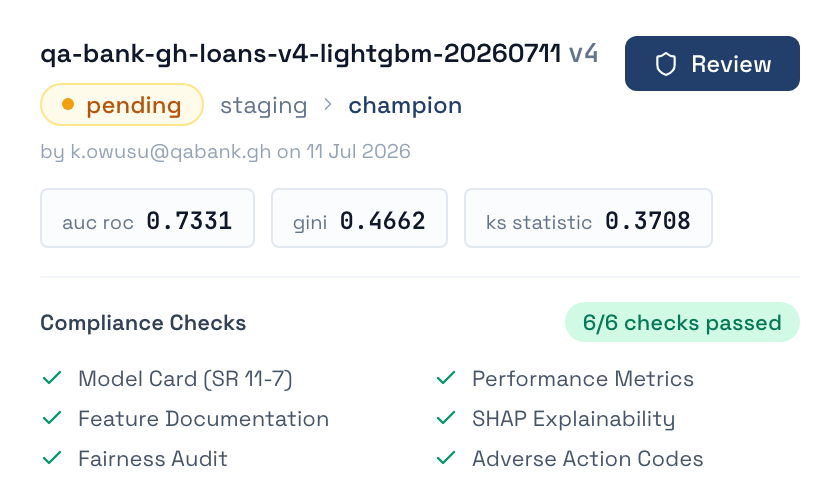
A pending approval moving a model version from staging to champion, with its performance figures and the six compliance checks it passed.

One loan book, one approved champion, and a row for every score.

Every score writes down the model version, the cut-off that decided it, and the reasons behind the result.

The loan book you already hold becomes the dataset the model trains on.

Upload the file, or point Atlas at the system holding it. Profiling infers each column's type, scores the file for completeness, consistency, accuracy and uniqueness, and names the columns carrying personal identifiers or a protected attribute.
Datasets
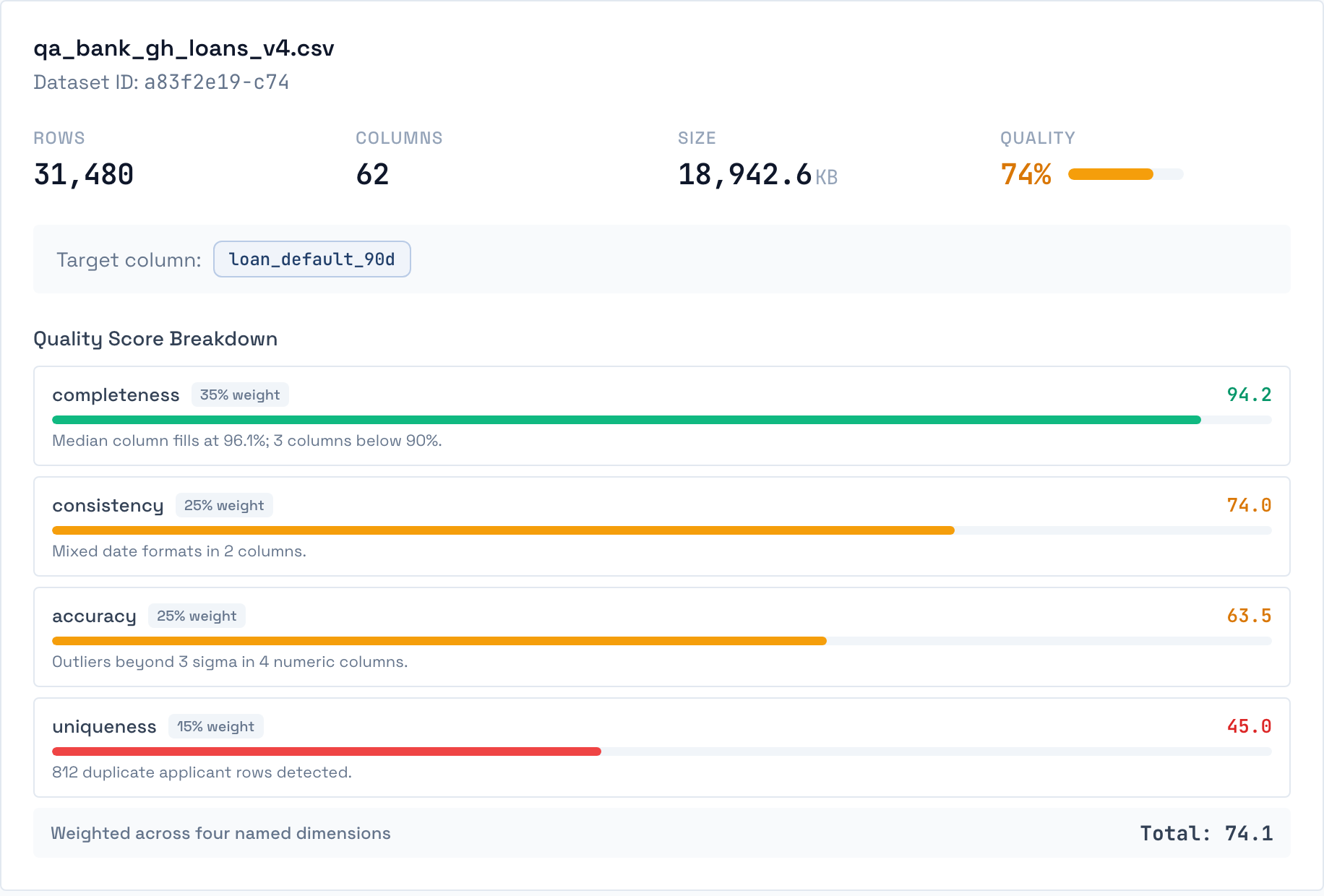
A dataset's quality report: its row and column counts beside one overall score, and the four weighted dimensions behind that score, each with the finding that moved it.
Datasets
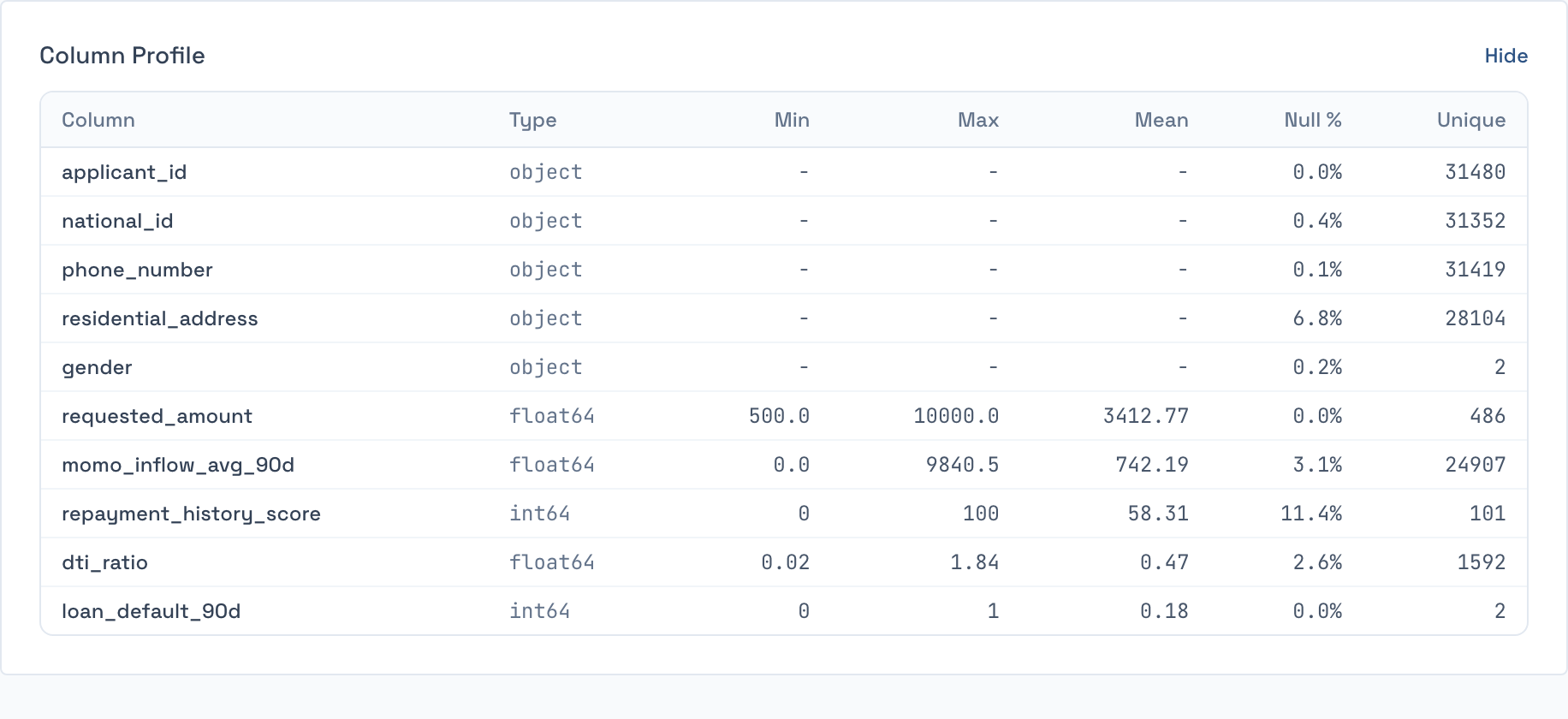
The column profile of the same file, listing every column with its inferred type, its range, its mean, the share of values missing and how many distinct values it holds.
Datasets
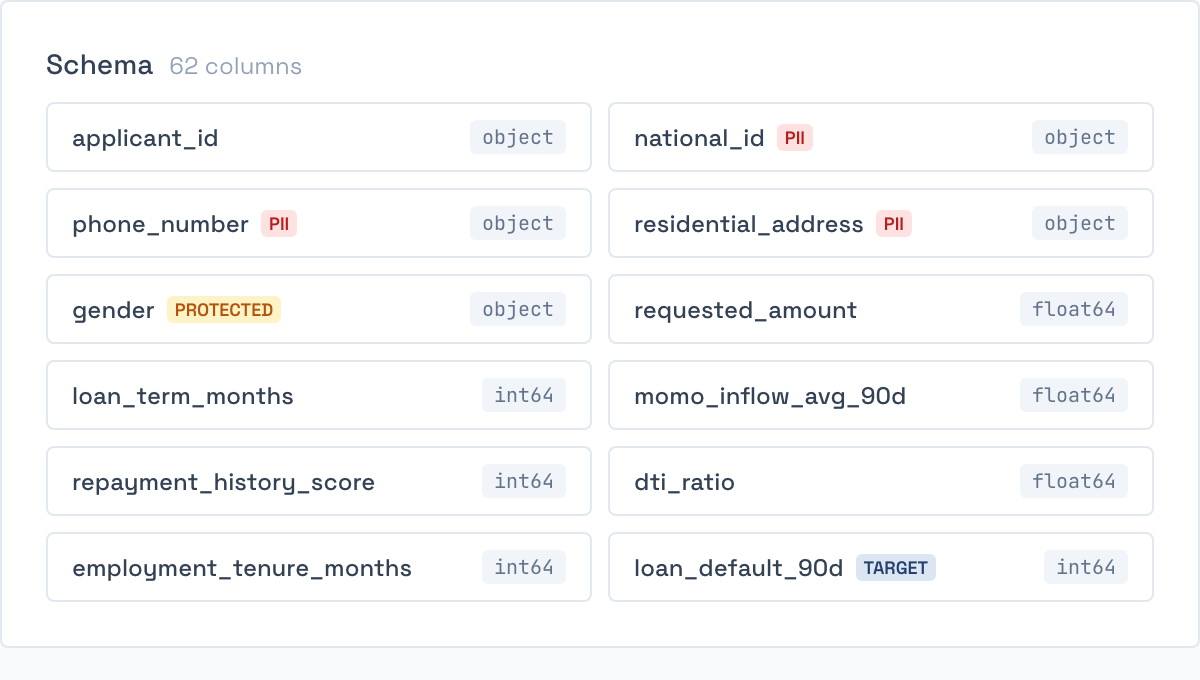
The file's schema, each column shown with its type and, where it applies, the badge marking it as a personal identifier, a protected attribute or the outcome the model is trained to predict.
Named on the profileFour columns are named on the profile before training: the three carrying personal identifiers, and gender.
02 · THE RUN

One run carries the book through six ordered stages and names a champion.

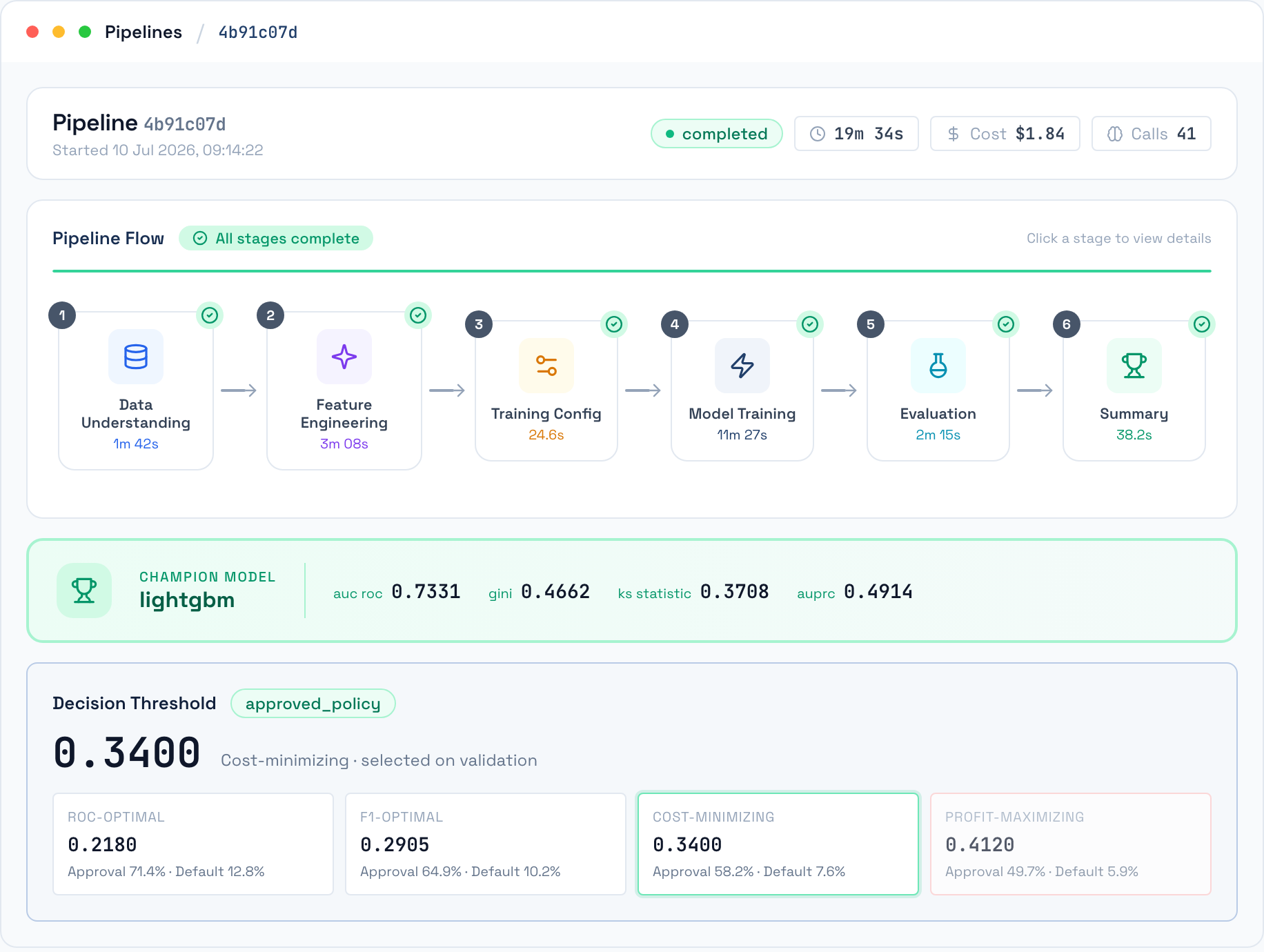
The run reads the data, engineers and selects the features, configures and trains the candidates, evaluates the winner and writes the summary. It records what each stage did, which model became champion, and the cut-off that model runs at.

A completed pipeline run: its six stages in order with the time each took, the champion candidate with its performance figures, and the decision threshold that was selected on validation shown against the alternatives it was chosen over.
03 · THE CHAMPION

A version becomes champion the moment a named reviewer approves it.

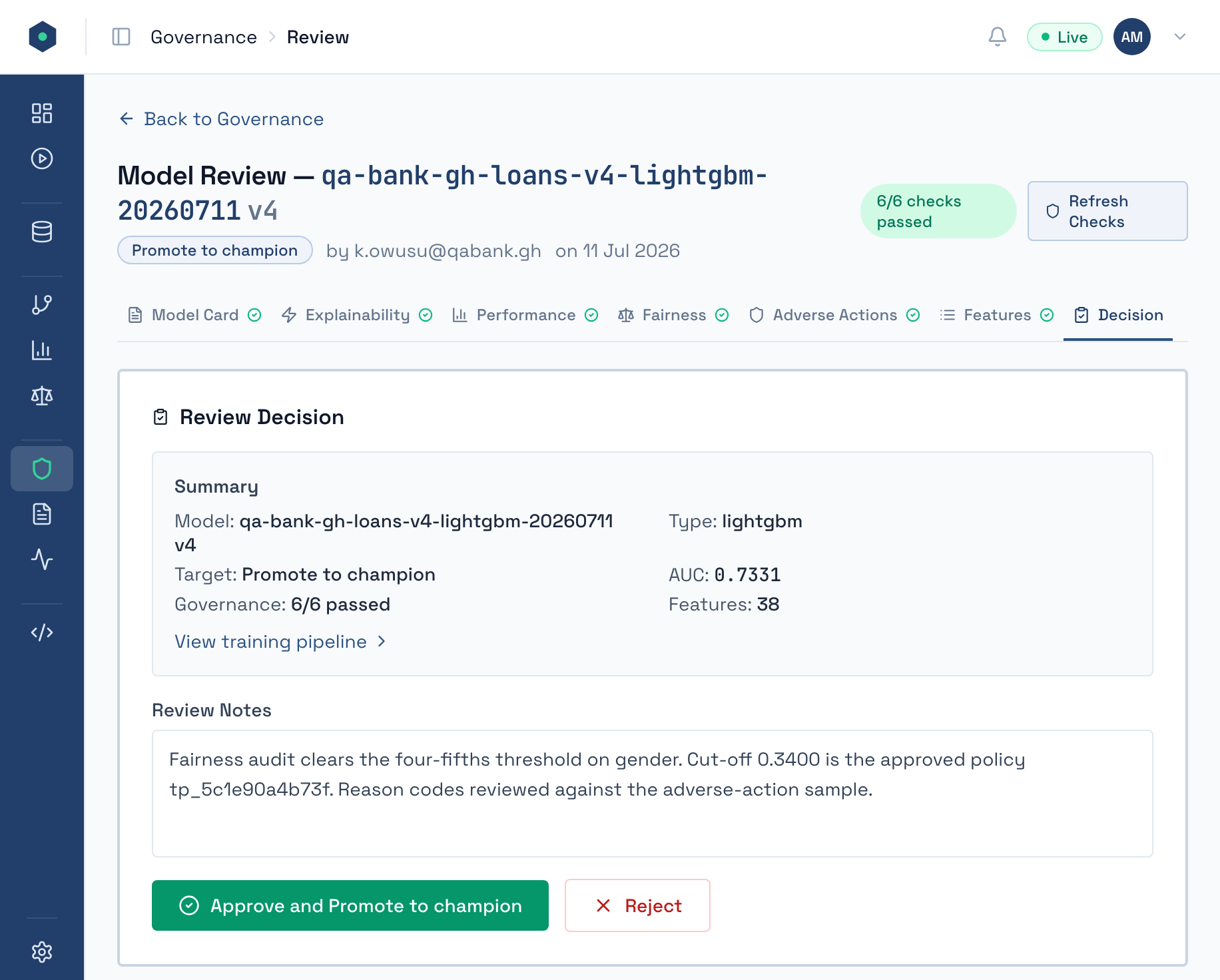
Data scientists build and compare the candidates; reviewers approve them and set the cut-off. Approval runs the six governance checks against the version in front of it, promotes the one that passes, and retires the champion it replaces.

A model review open on its decision tab, naming the version, the reviewer and the promotion requested, with all six governance checks passed and the reviewer's own notes on the fairness result and the approved cut-off.
04 · THE DECISION LOG

The record is written before the score is returned.

Each score writes a row carrying the probability, the credit score, the cut-off and where it came from, the model version, the rules that fired and the ranked reasons behind the result. A failed write stops the call rather than returning a score nobody can account for.

Decision Rules
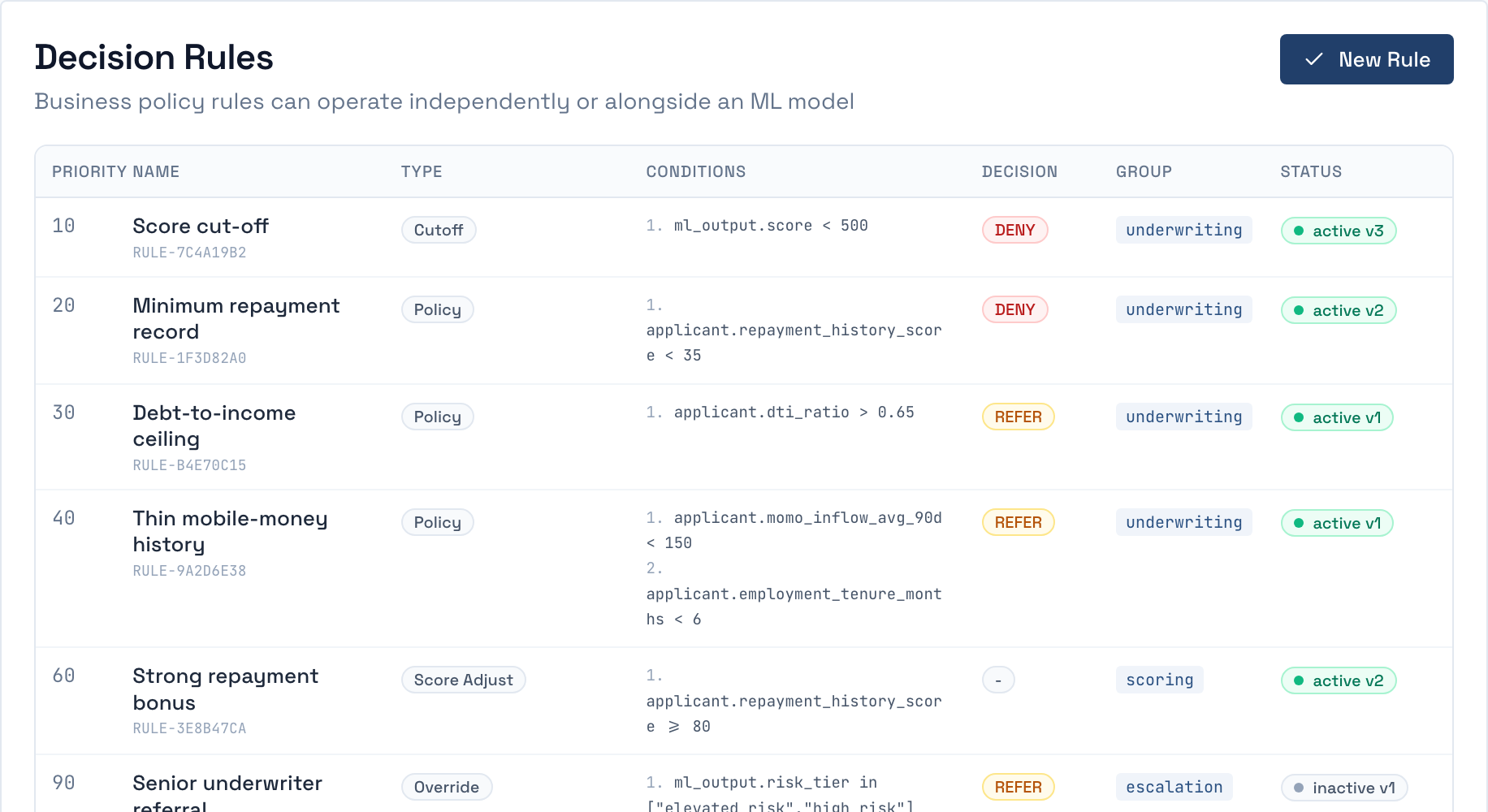
The decision-rules registry, each rule listed with its priority, the conditions it tests, the answer it returns, the group that owns it and the version of it that is live.
Decision Rules
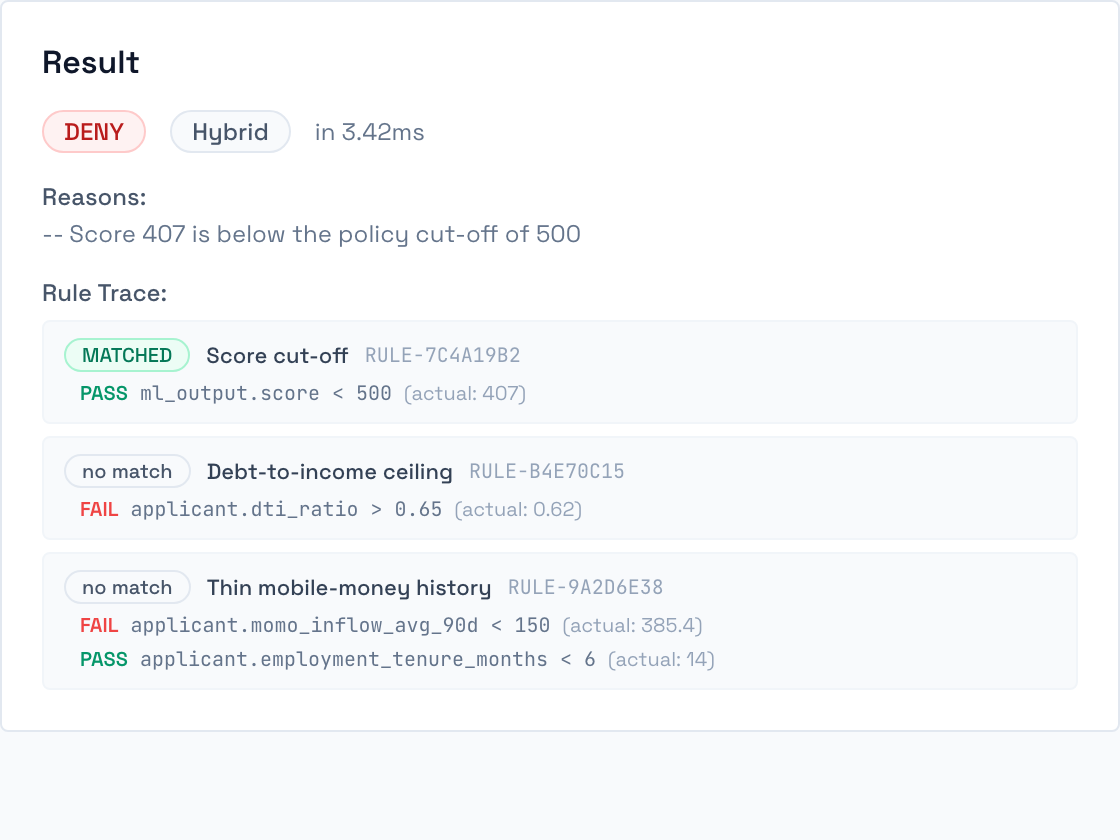
The trace behind one decision: the answer it returned, the reason stated in words, and every rule the policy evaluated with the comparison it made and the value it read.
What the row holdsA rules decision stores every rule the policy evaluated, in the order it ran them, against the decision under one fingerprint.
05 · THE OUTCOME

The repayment that follows attaches to the decision that granted it.

Each outcome is recorded as an observation, a correction or a reversal, carrying the date it took effect and the system it came from, so a later restatement sits beside the original. The next model learns from what actually happened.

Monitoring
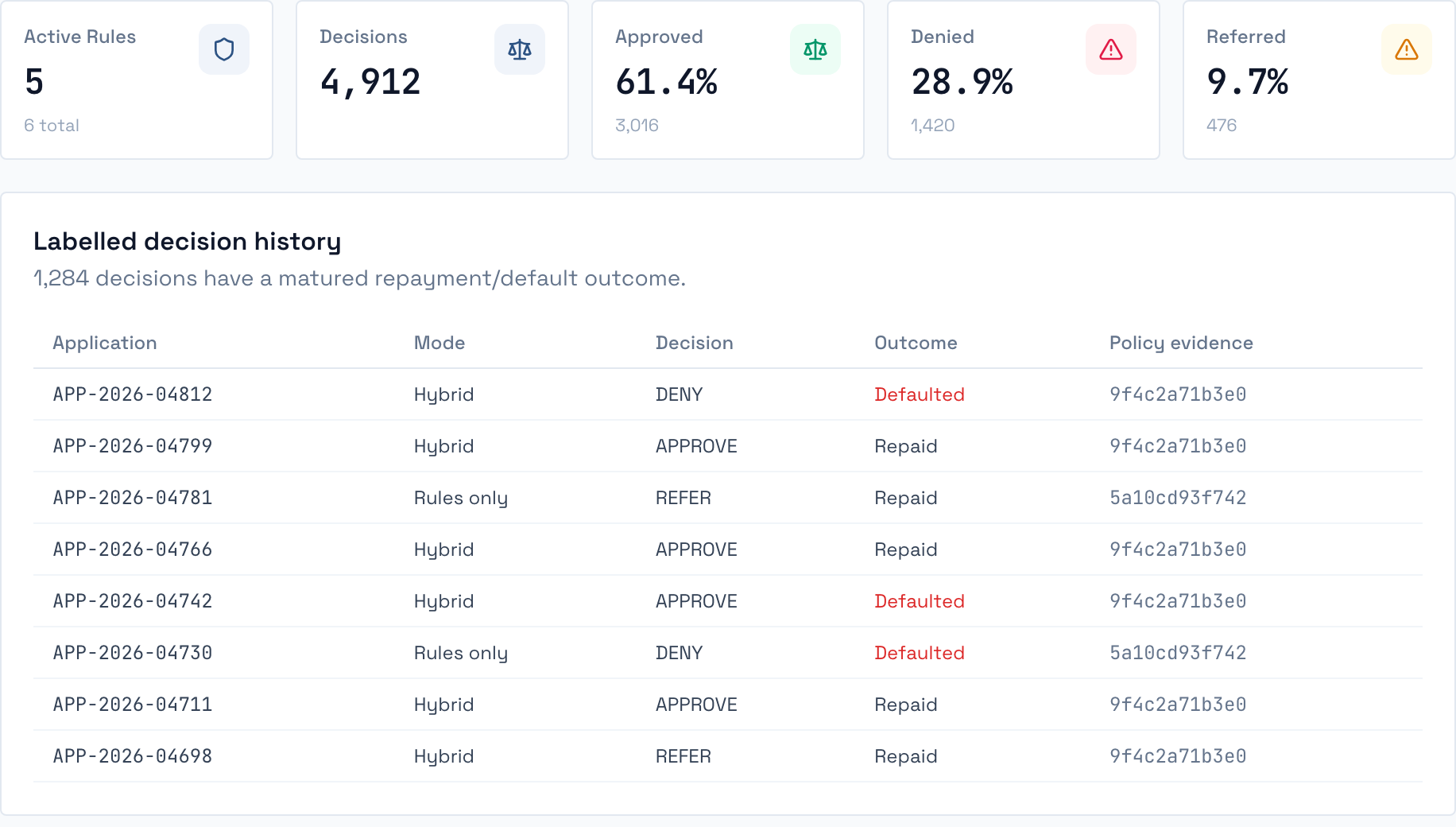
The decision history: how the book's decisions divided between approvals, denials and referrals, and beneath it the decisions whose repayment outcome has since matured, each shown against the policy that decided it.
Technical walkthrough

See it score your own loan book.

Bring a sample of your own loan book and the reviewer who will question it. An application goes in, a decision comes out, and the record that answers for it is already on file.

Book a demo
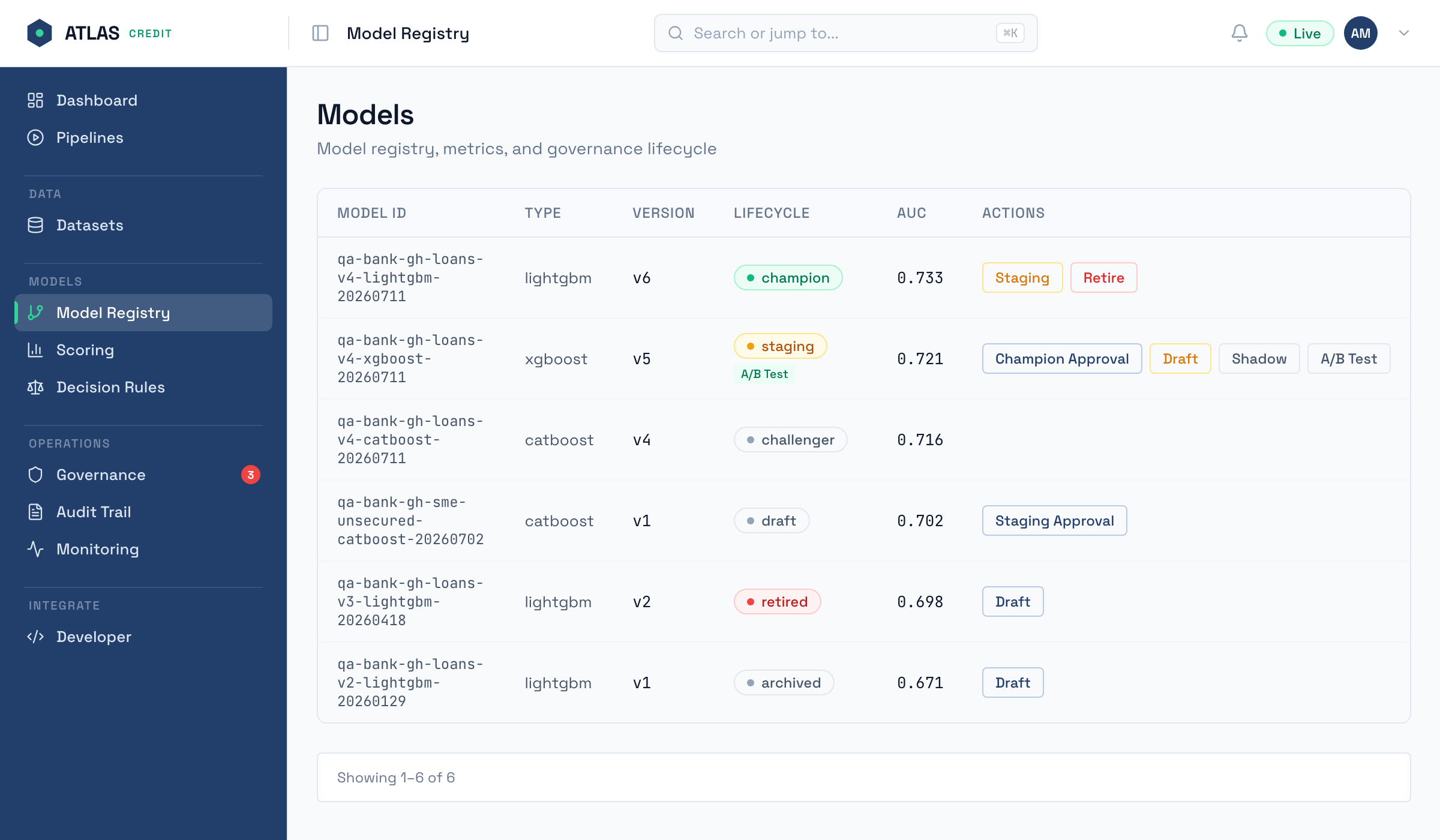
The Atlas model registry, listing every trained version with its type, its performance, the stage of its life it has reached, and the approval or retirement each one is waiting on.